Contents

Are you looking for a good and affordable tripod? Then the Sirui L-324F might be something for you. I received this tripod together with the Sirui KS-G3 geared tripod head to use for a course on tripods. I took the opportunity to test it extensively. You can read more about this tripod in this review.
Most (good) tripods are sold without a tripod head. Sometimes you can buy them as a set. However, unless it is exactly the head you are looking for, choosing tripod and head separately can be more sensible.
The Sirui L324F Landscape Carbon Fiber Tripod is such a tripod. It is sold without a tripod head as standard, although I have seen different kits as well. I received the Sirui KS-G3 geared head separately. This compact tripod head allows for precise adjustments.
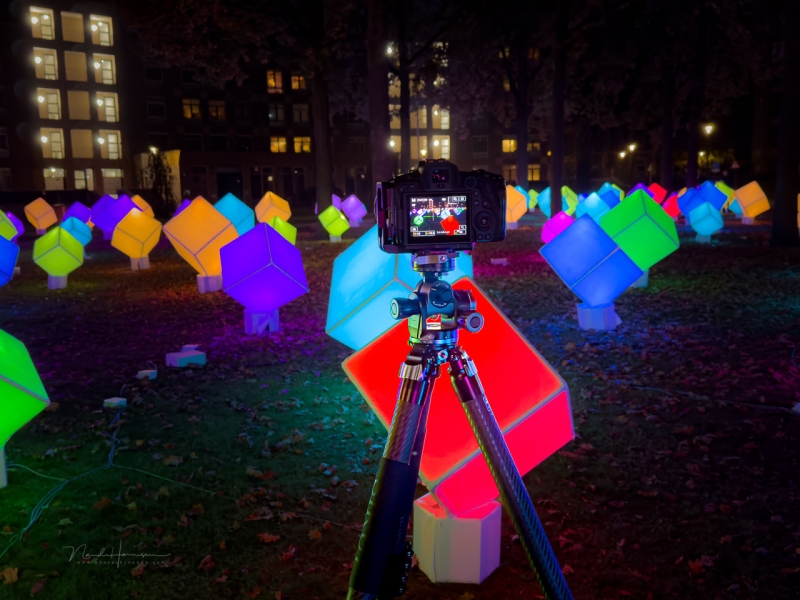
A beautiful L324F tripod from Sirui, with the geared KS-G3 head.
Let’s start with a brief list of the specifications. First, I take a closer look at the tripod, the L324F. After that, the KS-G3 head follows.
L-324F Landscape Carbon Fiber Tripod
- 8 layers of carbon fiber
- Weight without head: 1.75 kilograms
- Length folded, without head: 55 centimeters
- Maximum height, without head: 1.45 meters
- Minimum height, without head: 8 centimeters
- Maximum load capacity: 18 kilograms
- No center column, but a hook under the tripod base
- Legs can be placed at 22, 55, and 85 degrees with a semi-automatic lock system
- Thickest leg sections are 32 mm with four sections and an aluminum flip-lock system
- Diameter of the base plate: 45 mm
- Ball head connection: combined 1/4″-20 and 3/8″-16
- Rubber anti-slip feet, replaceable with supplied metal spikes
- Two mounting points, one 1/4″-20 and one 3/8″-16
- Price: $229
KS-G3 Geared Head
- Tilt from -40 to 40 degrees (lateral pan)
- Vertical tilt from -50 to 95 degrees
- Dual panorama control
- Mechanical self-locking gear
- Weight: 0.75 kilograms
- Maximum load capacity: 2.5 kilograms
- Height: 122 mm
- Base diameter: 60 mm
- Made of lightweight aluminum
- Price: $299
The Looks of the Sirui L324F Landscape Carbon Fiber Tripod
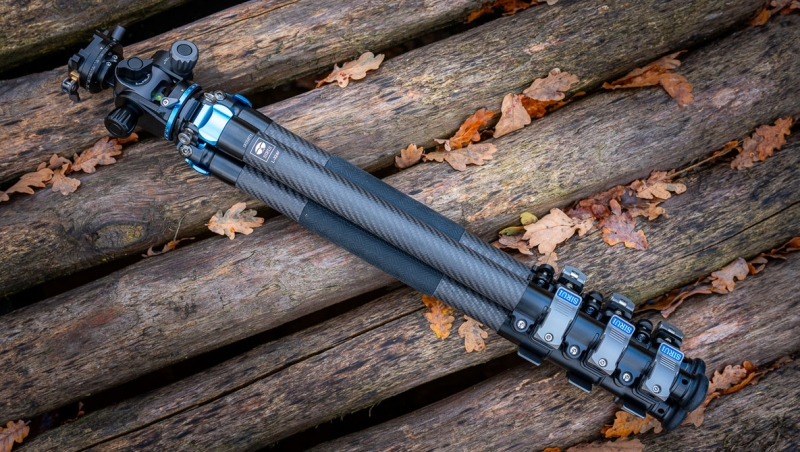
Both the tripod and the head have an eye-pleasing design. The typical blue accents stand out. The head and tripod also fit well together. The tripod is compact when folded. Due to the absence of a center column, the legs fold neatly together. The three flip-locks for extending the legs are large and therefore easy to operate.
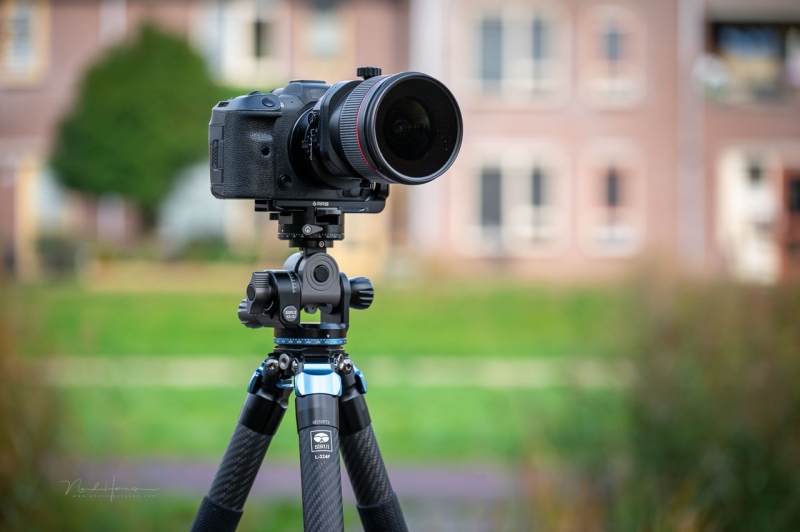
The blue accents look nice. More important is how the tripod and head perform.
Extending the legs is easy and the clamps hold the legs securely. This allows the tripod to support the 18 kilograms it is rated for. Two legs are partly covered with rubber. The legs can be set in three positions. The lock can be pulled out, after which it remains in the open position. When the legs are placed in the 85-degree position, the lock automatically snaps shut. This works very well.
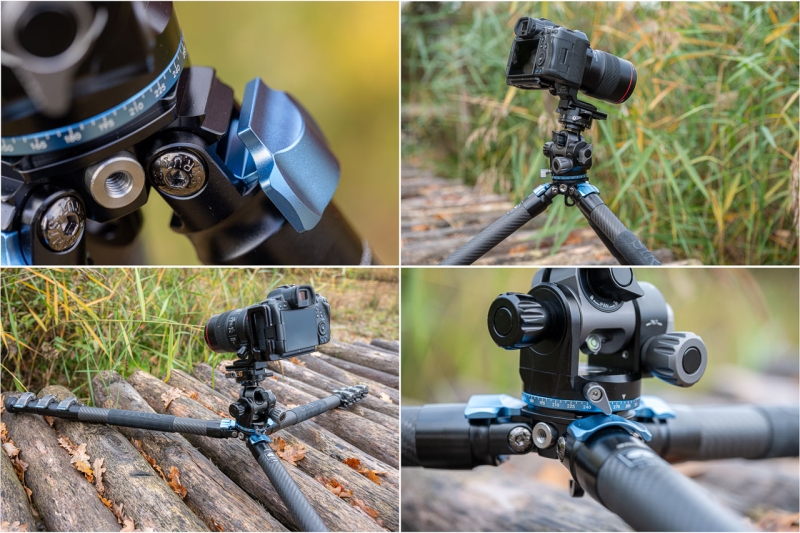
A handy release mechanism ensures you can easily place the legs in the desired angle. Be careful with scratches from the panorama rotation lever.
The large rubber feet can be replaced with the supplied spikes. A silicone seal protects the thread on the rubber feet from dirt. The spikes do not have this seal. The rubber feet also ensure that the flip-locks do not touch the ground when set to 85 degrees, provided the surface is level. With the spikes, the flip-locks will touch the ground.
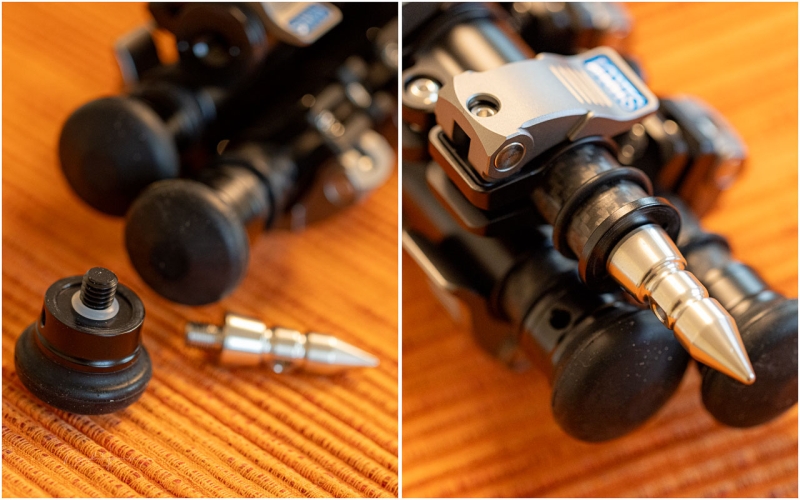
The supplied spikes are easy to install. Note the silicone sealing ring on the rubber feet. The spikes lack this.
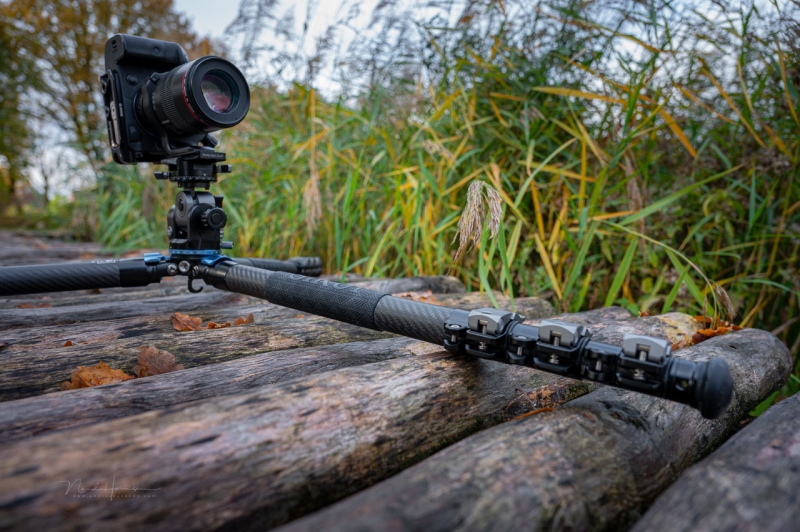
At maximum spread, the flip-locks can easily end up in water, mud, or sand. Especially on uneven ground, be aware.
The base plate of the tripod has two screw mounts on the side for accessories. There is a standard 3/8″-16 and 1/4″-20 thread. The base plate measures approximately 45 mm and contains the screw for the tripod head.
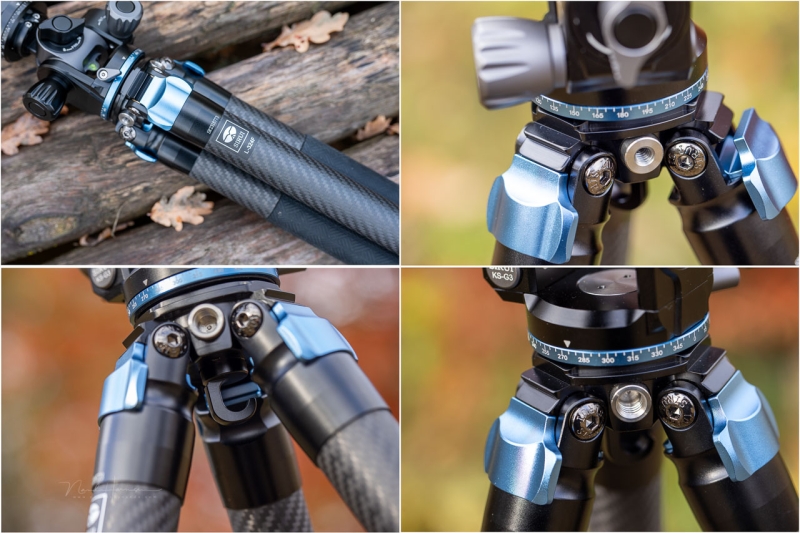
Two mounting points for accessories are present. A plastic hook hangs under the tripod. A center column is absent.
The 3/8″ part of the screw in the base plate is spring-loaded, so you can use both 1/4″ and 3/8″ connections without changing anything. Next to the base plate is a small bubble level.
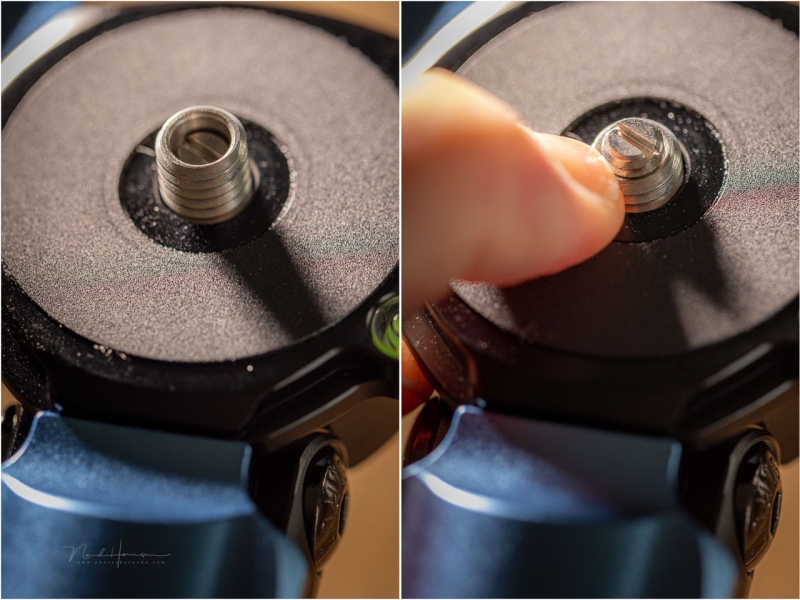
The 3/8″-16 thread is automatically pushed down when placing a head with 1/4″-20 thread. Handy.
The KS-G3 geared head has a slightly larger base than the tripod (60 mm versus 45 mm), causing it to protrude slightly. The bubble level therefore becomes invisible. However, the head fits well otherwise and looks like one piece with the tripod.
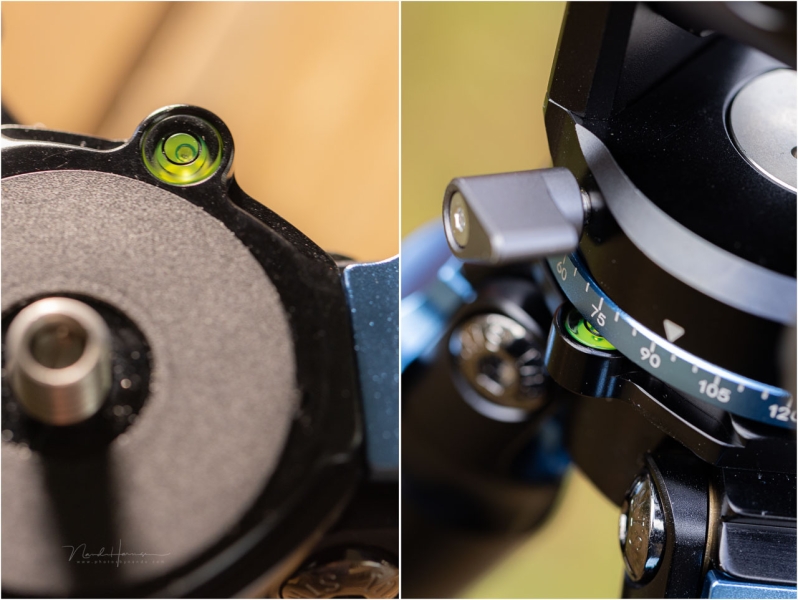
The bubble level is very small and not usable with a head wider than 45 mm.
The Looks of the Sirui KS-G3 Geared Head
That brings me to the KS-G3 geared head. It has panorama rotation both at the base and the camera mount. A degree scale is etched in and a spring-loaded lever locks the rotation. Tilt in horizontal and vertical directions is controlled via the geared adjustment knobs.
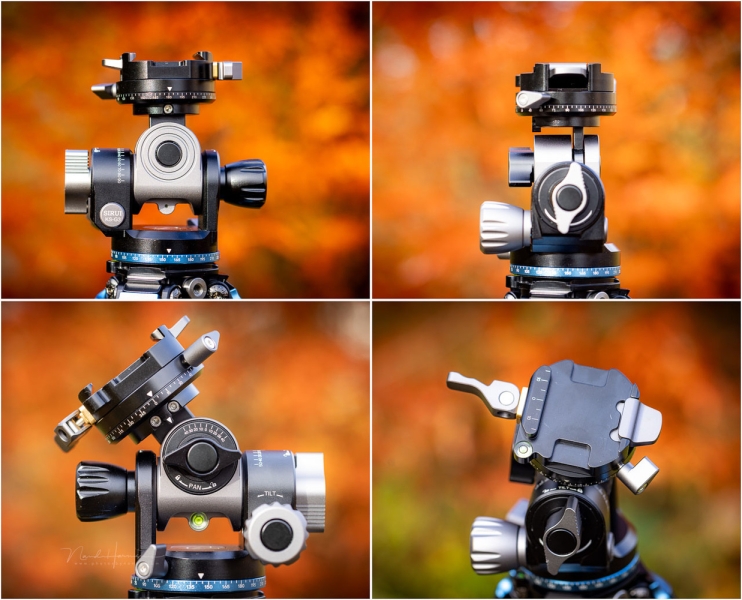
The KS-G3 geared tripod head. A 2-way geared head with an Arca-Swiss compatible camera mount.
The KS-G3 turns out to be a 2-way geared head. After all, the horizontal movement is a normal free rotation. The geared part consists of a self-locking gear, so you do not need to lock the position afterwards. For larger movements, a lever disengages the gears. The knobs are compact, just like the head itself. They turn rather stiff due to the self-locking system. They have milled ridges for extra grip. There is a degree scale for both tilting axes.
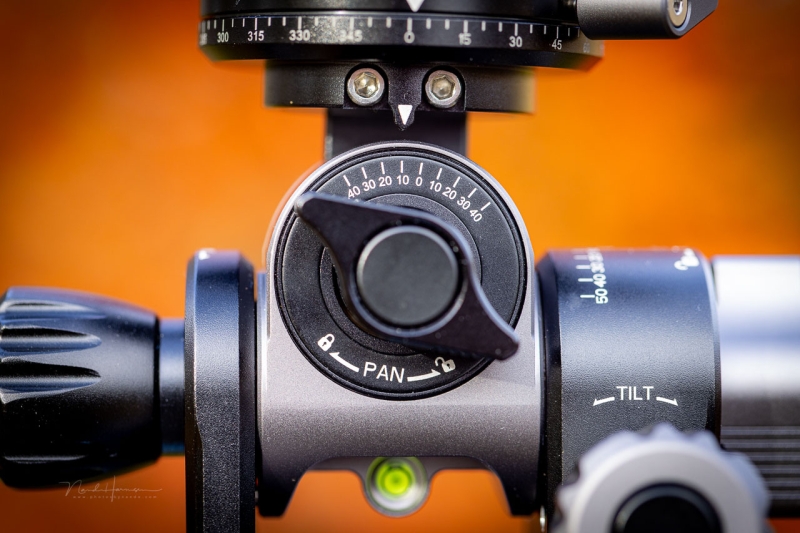
The release lever for the gears is large and easy to operate—too easy. Note the offset of the degree scale. A small factory mistake?
The camera clamp is small and Arca-Swiss compatible. The head is supplied with a compact camera plate that screws under the camera. The plate contains a hex tool that is necessary for adjusting the clamp tension. The tension adjustment is needed to clamp the camera firmly into place. Because the camera plate has a slightly different dovetail profile than standard Arca-Swiss plates, adjustment is sometimes necessary.
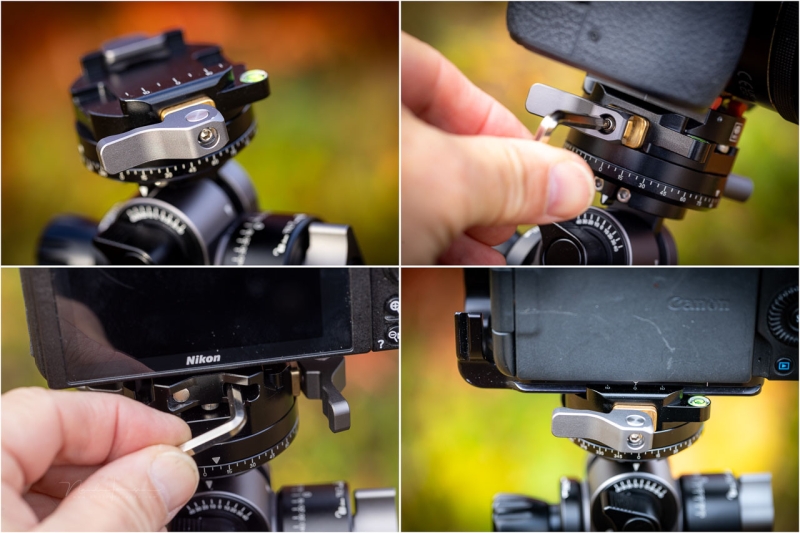
The clamp needs occasional adjustment depending on the Arca-Swiss plate. This must be done with a hex key and only when the clamp is closed. That is inconvenient.
Both tripod and head come in a separate bag. Accessories such as spikes and tools are included. The tripod bag is just the right size for the tripod without the head attached. If you want to use the bag, the head must always be carried separately.
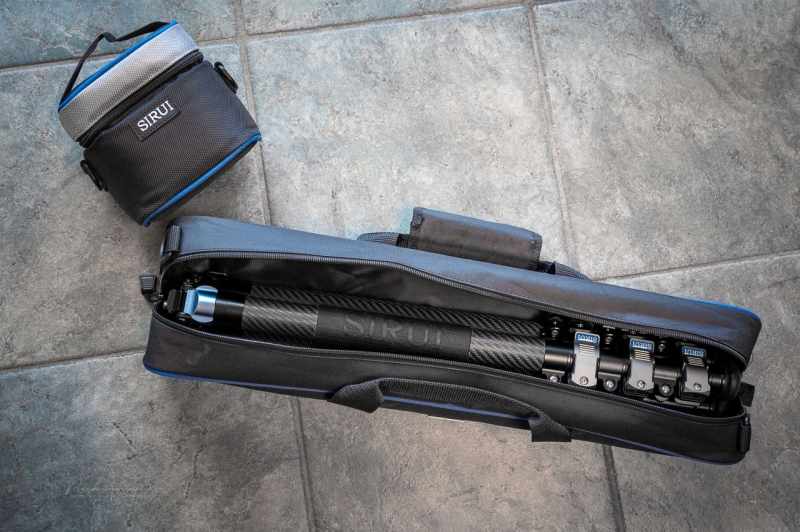
The neat bag can only be used when the tripod head is removed. A slightly larger bag would have been better.
Using the L324F Tripod in Real World Situations
I must state beforehand that I am not a fan of flip-locks. I prefer good twist-locks for many reasons. Using the Sirui L324F again confirmed why I have this preference. However, despite the personal preference, the flip-locks work well. The tripod legs are firmly locked and stay at the chosen length. The large flip-locks, however, can easily get caught on things. The risk of getting your fingers or skin pinched when opening or closing is significant. In my case, that is.
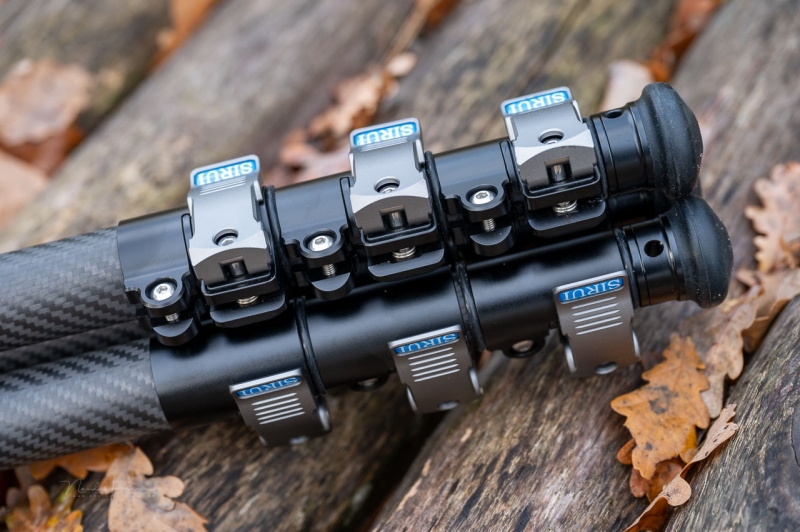
I am not a fan of these flip-locks. But that is not Sirui’s fault—they work fine and are easy to tighten or loosen with a hex key.
The weight and maximum height of the tripod is perfect for my height (1.72 meters). The absence of a center column is not a disadvantage—on the contrary. This allows the tripod to get very close to the ground.
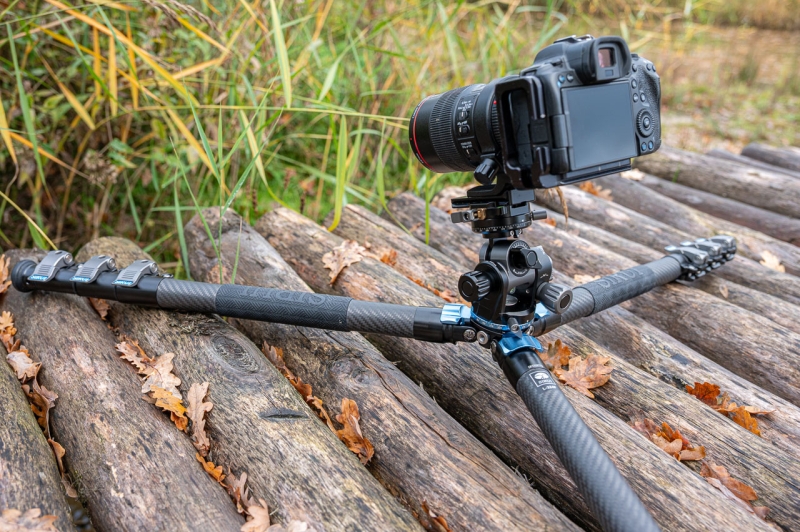
Thanks to the lack of a center column, low-angle photography is easy.
Being close to the ground does mean the flip-locks quickly touch the surface. A flat surface poses no problem with the rubber feet, but with spikes, they certainly will. Fortunately, you can always extend the legs slightly to avoid this.
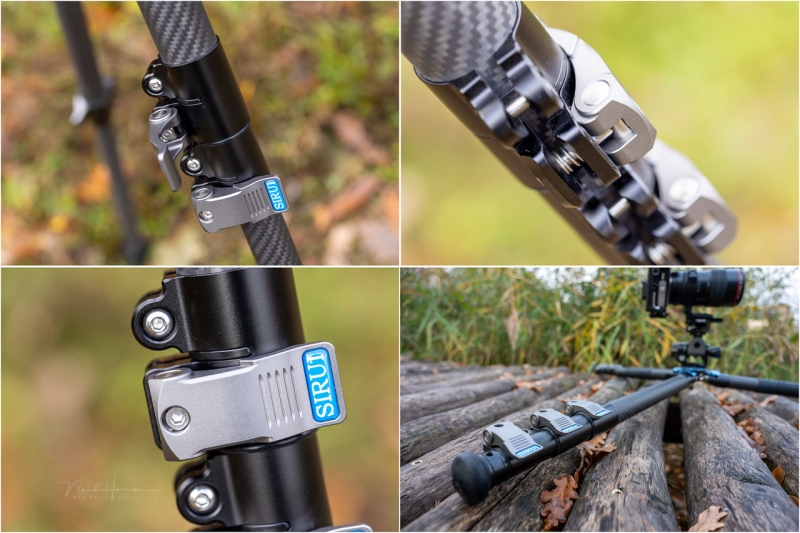
The flip-locks construction is sensitive to dirt.
Apart from the pinching risk, the danger of dirt is a bigger issue for a flip-lock system. If you use the tripod at the sea, on the beach, in the forest, or in water, regular cleaning will be necessary.
What About Using the KS-G3 Geared Head?
It is important to realize that the Sirui KS-G3 can only support 2.5 kilograms. This means it is only suitable for small or lightweight camera and lens combinations. Another important point is that this is not a 3-way geared head. Only lateral and vertical tilt are geared. Horizontal rotation (panorama) is a normal rotation that is locked with a clamp.
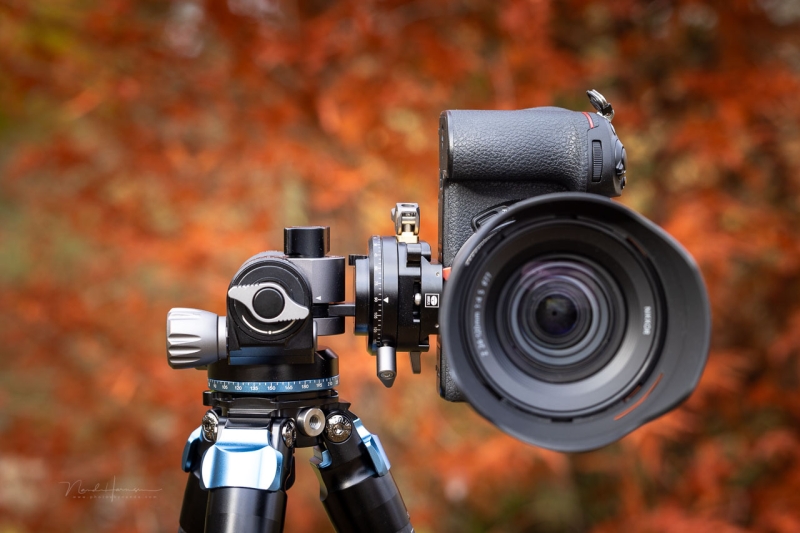
The head is only usable for lighter cameras and lenses. This Nikon Z6 II and Z 24-120mm f/4 is the maximum I would dare to use.
The rotation knobs turn quite stiff, which is fine. But the knobs are smooth despite their milled pattern. In cold weather or when wearing gloves, it becomes difficult to get a good grip.
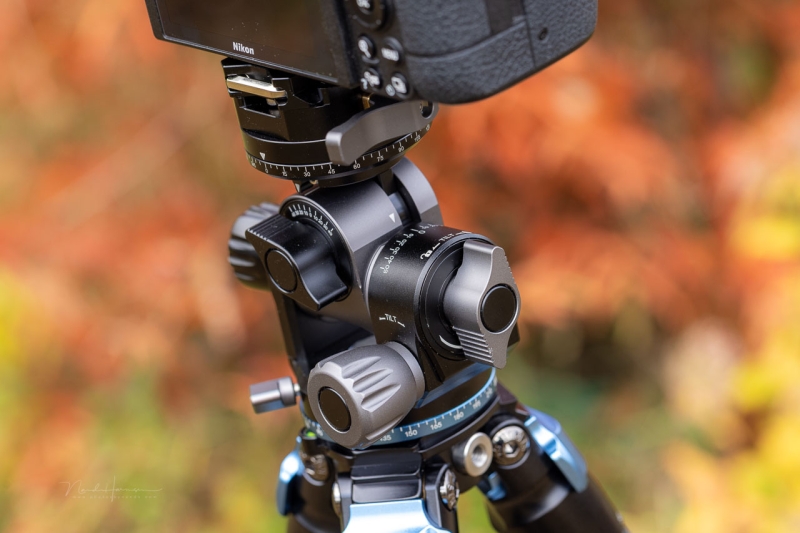
The knobs turn heavily, as expected. Cold fingers or gloves make you lose grip quickly.
A bigger disadvantage is the release levers for the geared movement. These loosen very easily. If you are not holding the camera firmly, it will slam down violently. Sirui should have added an extra safety mechanism. This would have prevented accidental release.
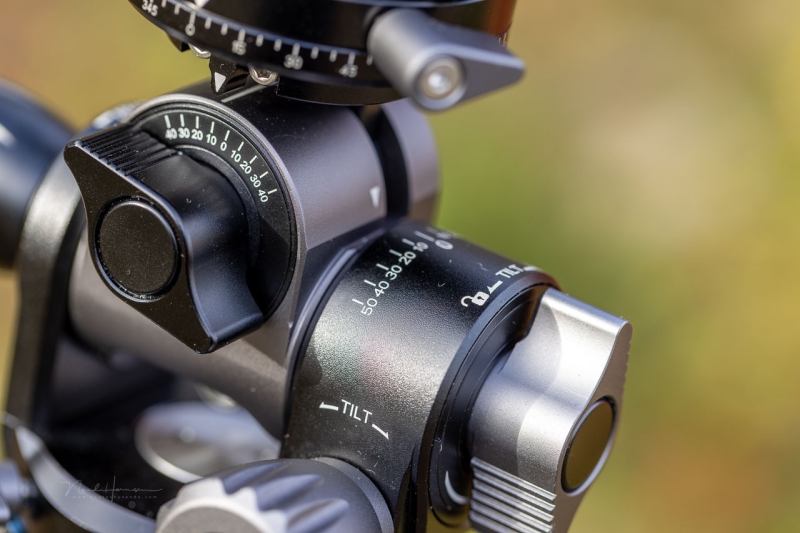
You can adjust tilt with the knob. Locking is not needed. Stay away from the large levers—they disengage the gears that hold everything in position.
The load capacity is so low that I am not trusting a large or heavy lens on this head. I would only recommend small primes or standard zoom lenses. In terms of stability, the head is usable as long as the camera and lens are not too heavy or unbalanced.
There is a bit of play between the head and the camera clamp. The play will not cause problems with lighter setups. The heavier the setup, the more critical it becomes. Longer focal lengths will also show issues and are therefore not recommended.
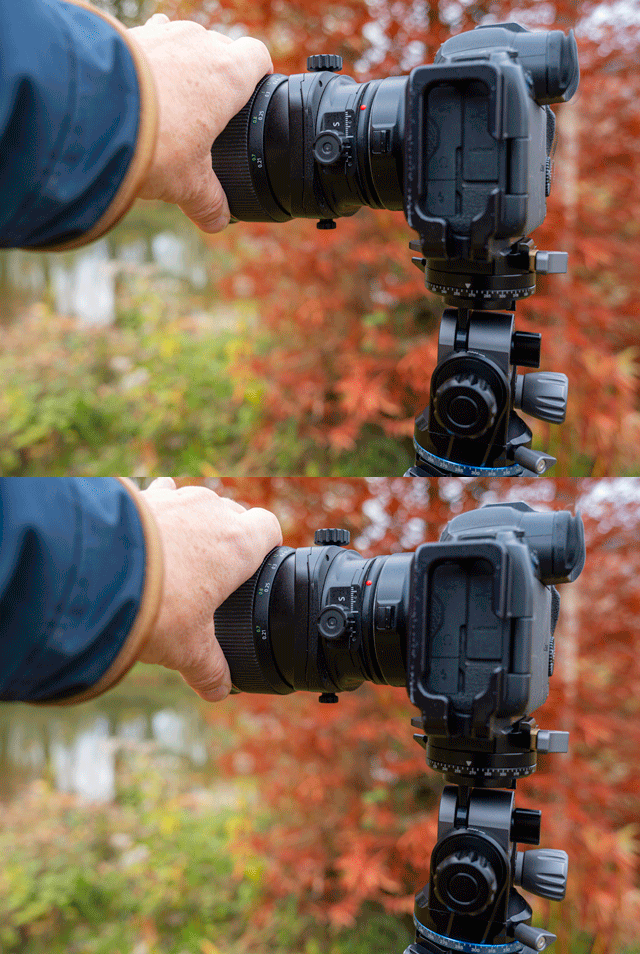
There is some play in the head. The camera and lens here weigh 1.7 kg, well within the limit. I didn’t had to use excessive force at all. Just operating the lens is enough for vibrations and slight movement.
One point of praise is the anti-rotation system on the camera plate. This prevents the age-old issue of rotating camera plates. It is simple but effective. However, because the plate must be mounted perpendicular to the camera body, the “center line” marking becomes useless. Mounting on the head also becomes more difficult, as the clamps are positioned under the camera.
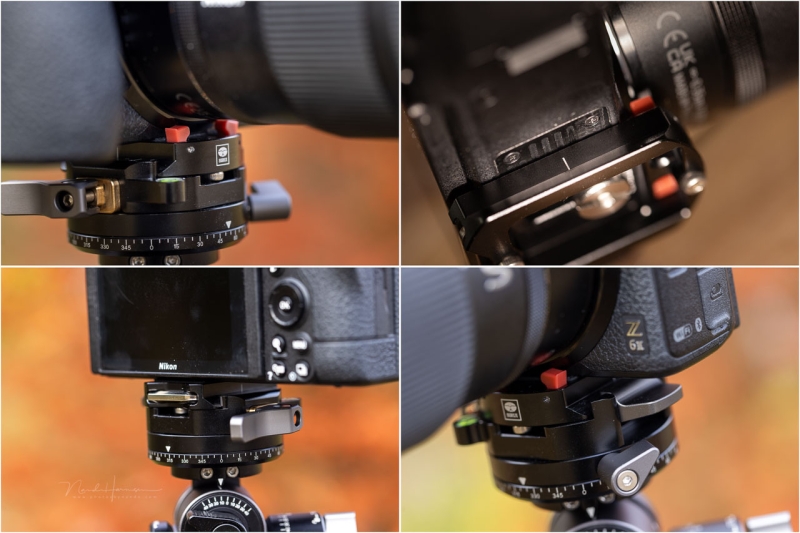
The anti-rotation pins are ideal. Unfortunately, they require perpendicular mounting under the camera, making placement harder. The center marking line is no longer usable.
Conclusion
The tripod is well made with a load capacity more than sufficient for holding nearly any camera and lens. The flip-locks are not my personal favorite. I often nearly pinched my fingers or skin.
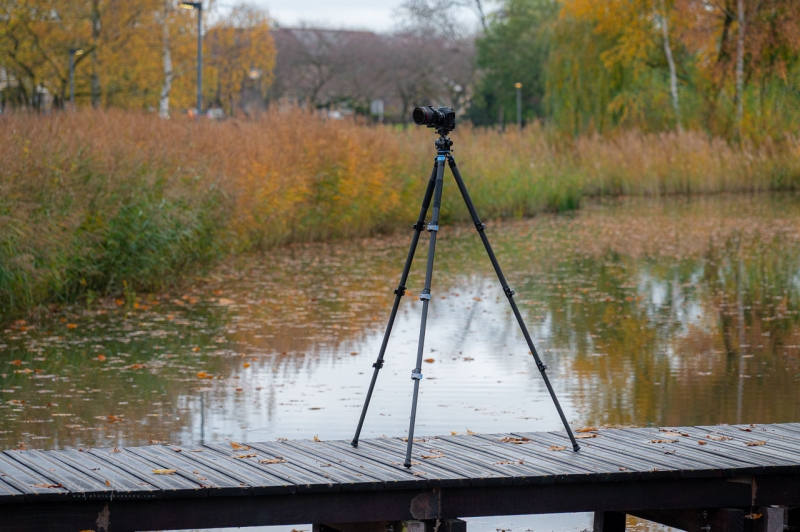
The tripod is very suitable, provided you don’t mind the clamps. It is more sensitive to dirt.
Flip-locks are not necessarily a disadvantage—they are a matter of personal taste. However, cleaning can be difficult. There are many small screws if you need to take it apart. Since the flip-locks can get in the dirt at the lowest angle, this might become a problem after all.
Aside from these points, I have little to criticize about the tripod. Most of them are mostly minor drawbacks, partly due to personal preference. If you like flip-locks, I can certainly recommend the Sirui L-324F. Just make sure to choose a suitable tripod head.
Pros of the Sirui LS 324L Tripod
- Attractive and compact design
- Fairly lightweight
- Accessory mounts via 3/8″-16 and 1/4″-20
- Spring-loaded 3/8″-16 socket for 1/4″-20 head connection
- 18-kilogram load capacity
- Legs fold compactly thanks to the absence of a center column
- Semi-automatic leg-angle locking
- Flip-locks adjustable with hex key
- Spikes included
- Attractive price
Cons of the Sirui LS 324L Tripod
- Rubber damping rings around the legs are loose
- No silicone seal on the spikes
- At 85-degree spread, clamps hit the ground quickly
- Flip-locks are sensitive to dirt—cleaning requires loosening many screws
- Bubble level is tiny and unusable with wider tripod heads
- Supplied bag is too small for tripod with head attached
Now let us talk about the KS-G3 geared head. I am not very enthusiastic about it. Although it looks attractive at first glance, it has more drawbacks than advantages. The low load capacity is one of the most important issues.
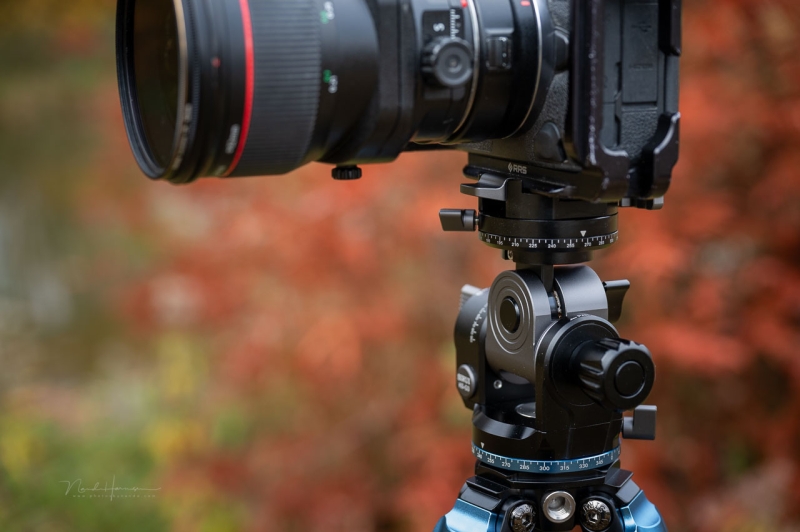
The KS-G3 has too many downsides. You can use it, but it requires constant attention.
The maximum load of 2.5 kilograms is far lower than what I would recommend. Therefore, it is not suitable for telephoto lenses, and I strongly advise against using one. This makes its usability very limited. The construction also introduces play, preventing the camera from being rock solid. That is unfortunate and a major drawback.
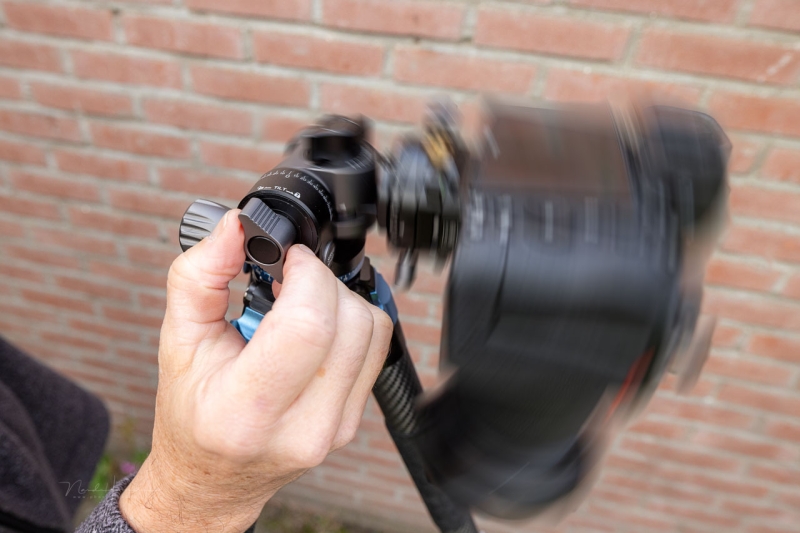
Be careful not to accidentally release the head. Especially tilt will slam down hard if you loosen the lever.
I am not happy about the construction of the release mechanism for the gears. A moment of inattention and you loosen it unintentionally, causing the camera to tilt down violently. You must always pay attention to avoid this.
The clamp for securing the camera must be adjusted with a hex key. This cannot be done on the fly, which is unfortunate. The clamp does not feel very reassuring. Fortunately, there is another lever that needs to be pushed to fully release the camera.
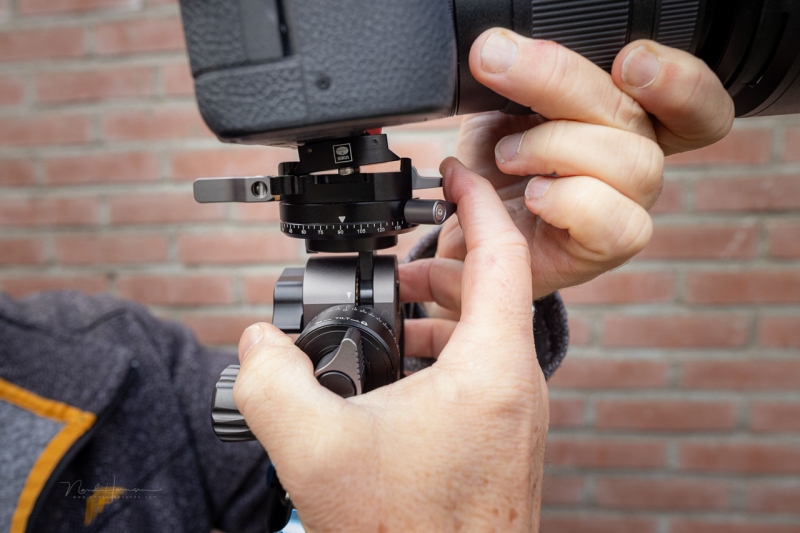
Two steps are required to remove the camera: unlock, then release. You cannot do it in one motion.
The KS-G3 geared head has many disadvantages, although you can work with it if you stay aware of them. However, the price of 349 euros is quite high for what you get.
Pros of the Sirui KS-G3 Geared Head
- Small and lightweight
- Gears are self-locking
- Separate levers for disengaging the gears
- Panorama function in the camera mounting plate and base plate
- Bubble level for horizontal and vertical use
- Camera plate includes hex key
- Anti-rotation pins in the camera plate
- Adapter from 3/8″-16 to 1/4″-20 included
- Comes with a neat pouch
Cons of the Sirui KS-G3 Geared Head
- Load capacity of 2.5 kilograms is too low
- Too much play in the camera holder
- Not suitable for longer lenses or focal lengths
- Panorama base is not geared
- Lateral tilt scale has 10-degree offset (on this sample)
- Release levers have no protection against accidental loosening
- Gear knobs offer little grip
- Hex key required for adjusting camera clamp
- Clamp can only be adjusted when closed
- Bubble levels are very small
- Camera removal requires two operations
- Camera plate has a sharper dovetail than standard Arca-Swiss
- Anti-rotation pins enforce perpendicular mounting
- Much too expensive
This review leaves me with mixed feelings. I am fairly enthusiastic about the tripod, especially considering its reasonable price. I am personally not fond of the flip-locks, but that hardly weighs into the overall rating.
The head, however, is a different story. Using it does not inspire confidence. Although the gears are easy to set precisely, the construction is too fragile and introduces too much play. This makes it usable only in a very limited way.
I can recommend the Sirui L324F tripod for those who are in search for a sturdy tripod for a reasonable price. But it would be wise to choose a completely different tripod head. Unfortunately, I cannot recommend the KS-G3 geared head.