Contents

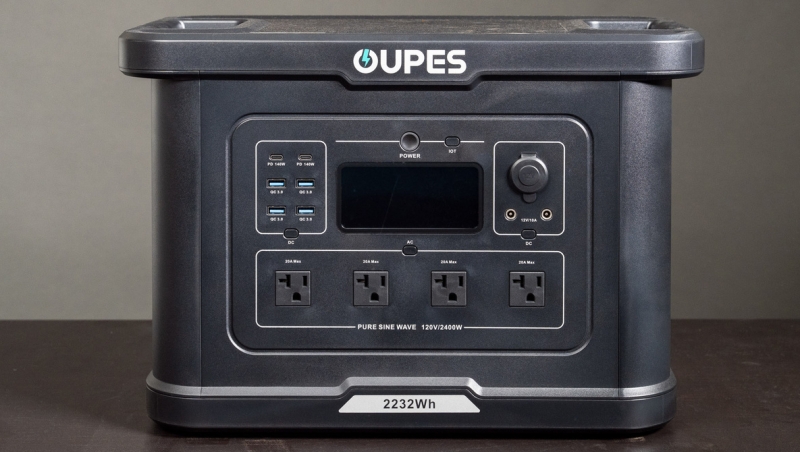
Reliable power on location is a necessity for creators, but high-capacity units are often expensive. The OUPES Exodus 2400 aims to challenge that with a compelling feature set at a budget price. I put it through its paces to see if it can keep up.
When V-mount batteries and USB-C battery packs aren’t cutting it, your options for power in the field can feel limited. Large power stations are an ideal solution, but they can carry a hefty price tag for something you might not use all the time. After spending some time with the Exodus 2400 on a few shoots, I wanted to see if this budget-friendly unit could handle the demands of a working creative or if the compromises were too great compared to the competition.
Specifications and Build
The Exodus 2400 features a 2,232 watt-hour Lithium Iron Phosphate, or LiFePO4, battery. This battery chemistry is a key feature, known for its safety and longevity compared to competing chemistries. OUPES rates it for over 3,500 charge cycles before significant degradation.
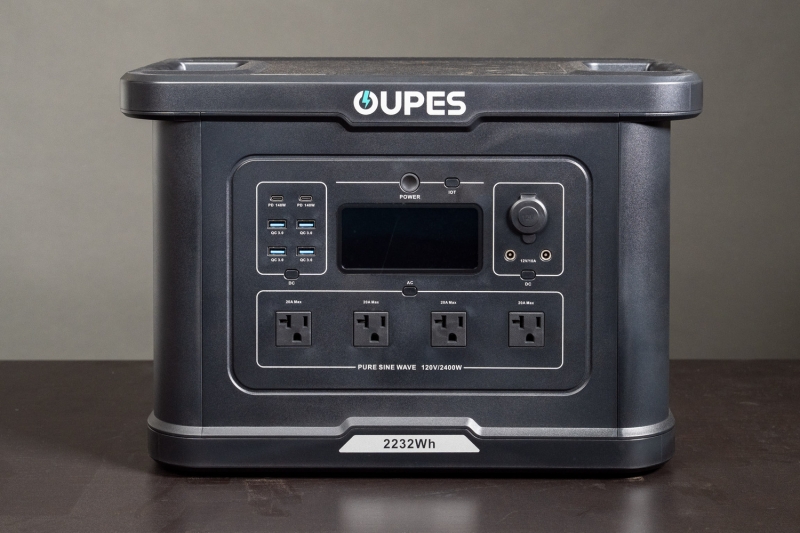
This rating means the cells should last for years of regular use, but also reveals one of the first areas where features are cut compared to more premium models, with other units I’ve tested featuring 6,000 cycle lifespans. In the end, thousands of cycles is still many years of use for even heavy users, especially because that lifespan is typically rated for a conservative drop to 80% of original capacity.
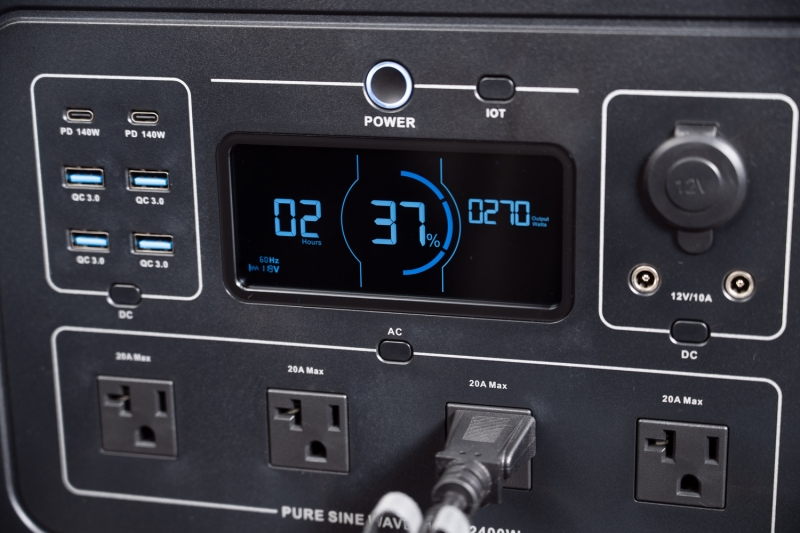
The OUPES unit is rated for 2,400 watts of power via a pure sine wave inverter. This is more than enough to handle power-hungry equipment like high-output continuous lights and multiple devices at once, with each of the outlets on the front rated for 20 max amps of draw. For those moments of high demand, it can handle up to 2,600 watts via boost mode, as well as 4,500 W surges.
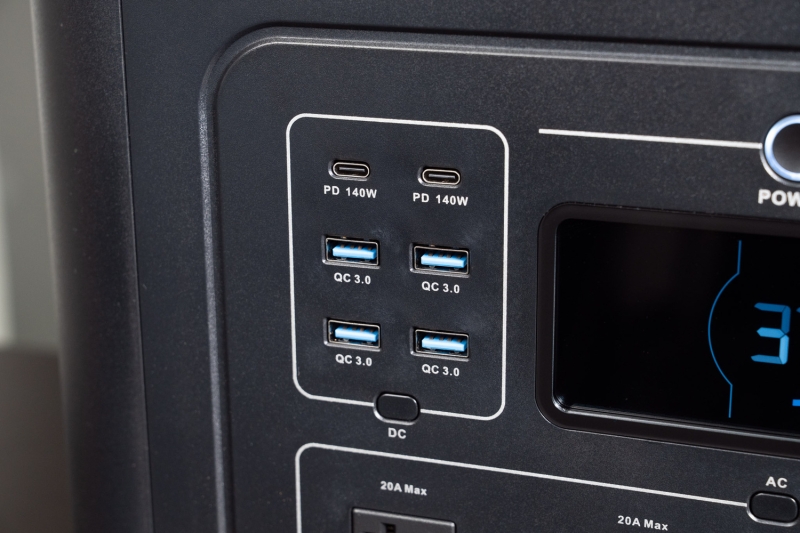
The port selection is generous and well thought out. It includes:
-
Four 120 V AC outlets
-
Two 140 W USB-C ports
-
Four 18 W USB-A ports
-
One 12 V car socket and two DC barrel connectors
The ports are well spaced across the front of the machine, with the AC ports in particular having plenty of space for wall-wart-style chargers or bulky plugs.
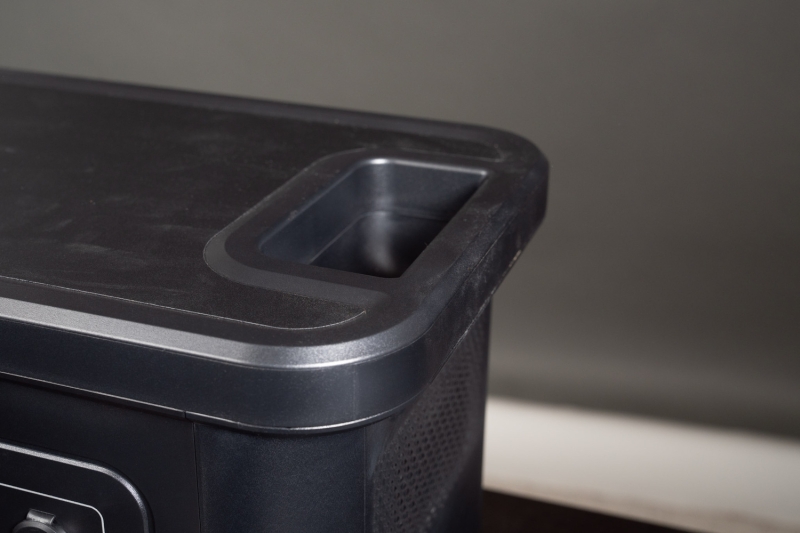
Physically, the Exodus 2400 is substantial but manageable. It weighs in at 45.2 pounds, and it incorporates two large, sturdy, and comfortable handles that make carrying it easier than some competing designs, which hide the handles away.
The LCD screen is another high point. It is bright, clear, and easy to read even in direct sunlight, displaying all the essential information like battery percentage, input and output watts, and estimated runtime. The screen isn’t particularly fancy, but clearly delivers the information you’d want to see.
Performance in the Field
In my testing, the Exodus 2400 performed as advertised. It had no trouble powering a trio of 600-watt LED lights while simultaneously charging a laptop and camera batteries. The inverter handled its rated 2,400-watt load without issue. The pass-through charging worked, allowing me to charge the unit from an AC wall outlet while still powering my gear, although you’ll want to keep that 1,400 W wall charging limit in mind (as well as North American residential circuit limits).
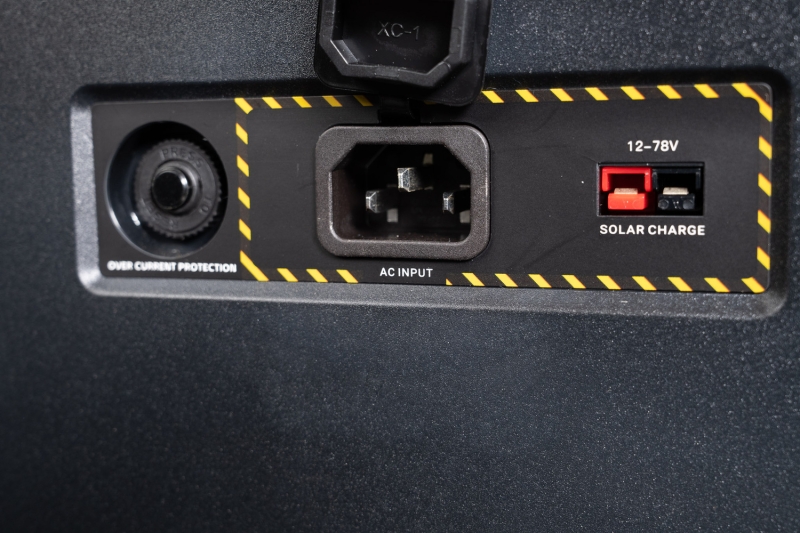
Efficiency was reasonable for a unit in this class. The idle power consumption, which is the power the unit draws just by being on, was around 30 watts per hour. This is not the best I have seen, and could make a meaningful dent in your capacity if left on overnight, but it is acceptable.
The unit also claims to function as a UPS, or uninterruptible power supply, with a claimed switchover time of under 20 milliseconds. That’s a bit slower than the ATX (desktop computer PSU) specification requires, so for mission-critical computers, this is an option but probably not a first choice.
It’s important to note the cooling fans are a bit loud. When the inverter is under a heavy load or during fast charging, the fans are easily audible a few feet from the unit. If you have it sitting out on a quiet set, setting it a few feet back from mics and talent will help, and it is far, far quieter than competing fossil-fuel generators.
The App Experience
Unfortunately, the weakest part of the OUPES experience is the companion app. It requires you to create an account and log in, and the interface is cluttered with dedicated tabs for a store and OUPES social media channels. Most importantly, despite several attempts, I was unable to get the app to pair with my unit, an issue that seems to be a common complaint among other users. For a product that works well otherwise, the app experience was a letdown, but with no core functionality being tied to the app, it’s not a critical issue.
Solar Charging
Recommending portable solar with a 2 kWh power station requires some planning, as even in ideal conditions, you’re looking at nearly two full days of “peak sun” to recharge the battery from empty with the 240 W panel in a sunny, low-latitude location. As a result, AC or car alternator charging is typically a better choice, and fortunately, OUPES supports those functions equally well.
Still, OUPES offers bundles with 100 W, 240 W, and 2 x 240 W panels, and the panels themselves work fine. I had the opportunity to test the 240 W panel with the Exodus 2400. The panel itself is rated for 23.4% efficiency, weighs 18.5 lbs, and measures 99.5″L x 23.2″W x 1.4″H. The real-world wattage into the Exodus in sunny conditions was about 150 W/h.
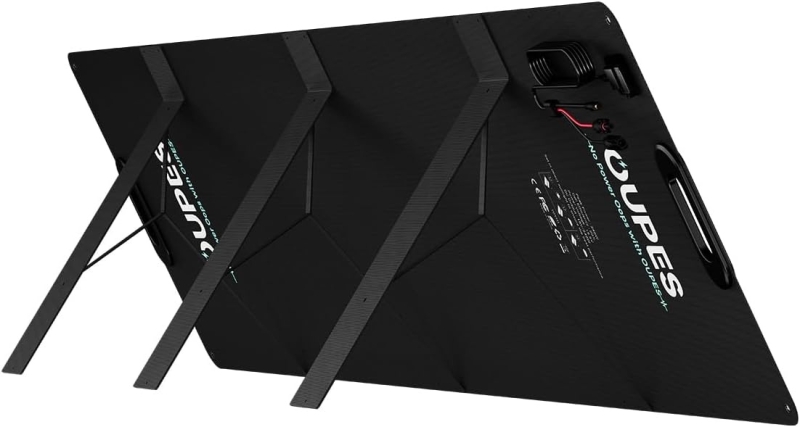
The panels are easy to unfold, reasonably lightweight, and have attached cables to make deployment easy. The built-in legs make it quick to position the panels correctly, and there’s an included shadow guide for lining up with the sun. The Exodus 2400 includes support for MPPT (solar-panel charging) at 800 W, and that functionality is built in, a nice bonus over some more expensive units that require a separate module.
Using the whole combo is quite easy, letting you stretch the battery’s lifespan in the field. If your daily use is under 1 kWh, you could even recharge in the field perpetually, a nice plus for multi-day camping scenarios or van-living content creation.
Value and Conclusion
Like many products in this space, the pricing for the Exodus 2400 can fluctuate. It carries a high list price but is often on sale for a much lower figure, with hundreds of dollars of discounts available. While I am not a fan of this type of pricing strategy, the final street price is what truly matters. At the time of publication, with a street price of around $649, the Exodus 2400 comes in at about 30 cents per watt-hour. That is an exceptional value for a power station with these specifications and a modern LiFePO4 battery.
If pricing climbs higher than that $649 figure (i.e., there isn’t a sale or coupon active), things get a little messier, as units with more features or more durable cells start to become price competitive. As always, check pricing.
That 30 cents per watt-hour figure makes the Exodus 2400 a clear value choice if you need a lot of battery in a reasonably sized box, and goes a long way toward addressing some of the quibbles about the app and fan noise. The implied $250 price for the 240 W solar panel in the combo is also competitive for a panel with those specs.
Overall, the OUPES Exodus 2400 is a value-focused power station that delivers on its core promises. It offers a lot of power, a versatile selection of ports, and a long-lasting battery technology that should provide years of service. It has rough edges with the app, but for creators on a budget and weekend-warrior nature photographers, these will be easy to overlook given the outstanding value proposition and the ability to just use this as a big battery in the field.
What I Liked
-
Excellent performance and capacity for the price.
-
Long-lasting and safe LiFePO4 battery chemistry.
-
Bright, easy-to-read display.
-
Well-spaced ports and a practical handle design.
-
Multiple 140 W USB-C ports for modern laptops and devices.
What Could Be Improved
-
The companion app is the weakest I’ve tested in the power station space.
-
The cooling fans are loud under load.