Contents

The Platypod is a handy tool for your camera when a tripod is not allowed or not possible. It comes in two sizes and offers many possibilities. I received both versions for an extensive review. How does the Platypod perform, and how usable is it in practice?
Platypod is a small family business founded in 2014. It creates flat, easy-to-carry platforms for cameras. The name is inspired by the unusual mammal known as the platypus.
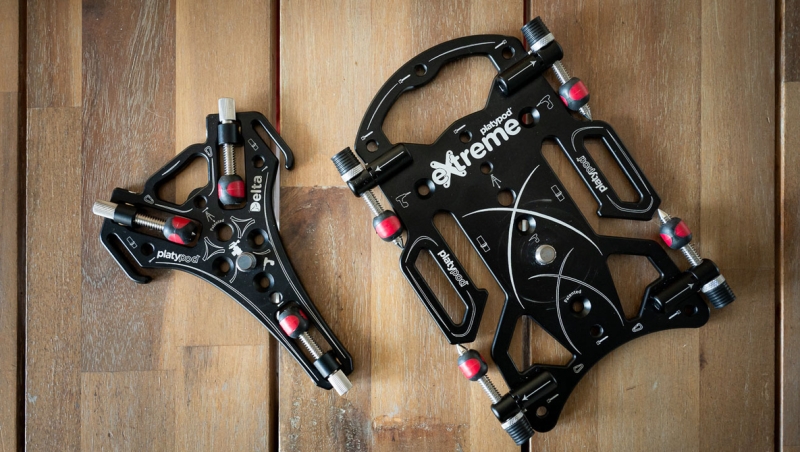
The newest models are the Platypod Delta and eXtreme. The Delta is a compact version with three small legs. The eXtreme is larger and has four legs. The concept has intrigued me for quite some time because it allows you to place the camera extremely low using a simple metal plate as a base.
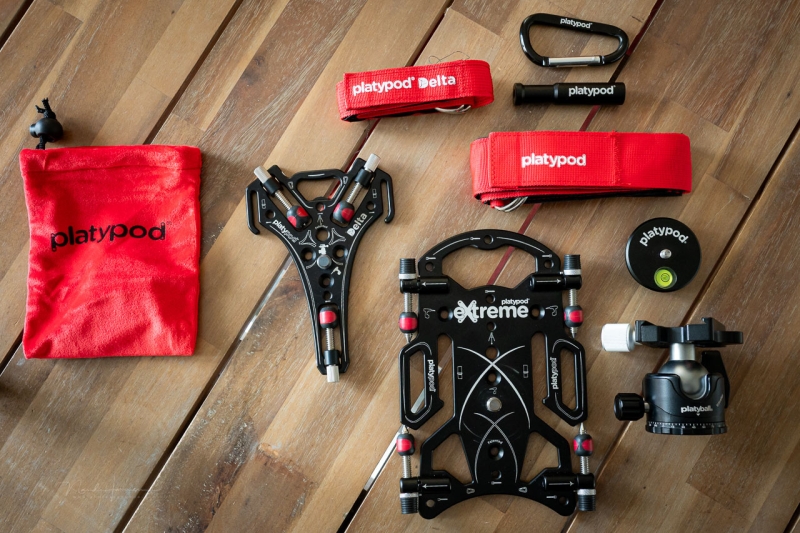
The Platypod Delta and Extreme with accessories.
The key advantage of the Platypod is its portability. It’s a flat object that fits easily in almost any bag, giving you a stable platform when a tripod is unavailable or prohibited.
Appearance
Both the eXtreme and Delta are nicely finished.
They’ve been improved in several ways compared to earlier versions and include many mounting holes with icon indicators that show their intended uses.
The eXtreme measures 19.7 by 13 centimeters and is 14 millimeters thick. It weighs 272 grams. It has four adjustment screws that function as legs and comes with a neoprene pouch that is slightly too small.
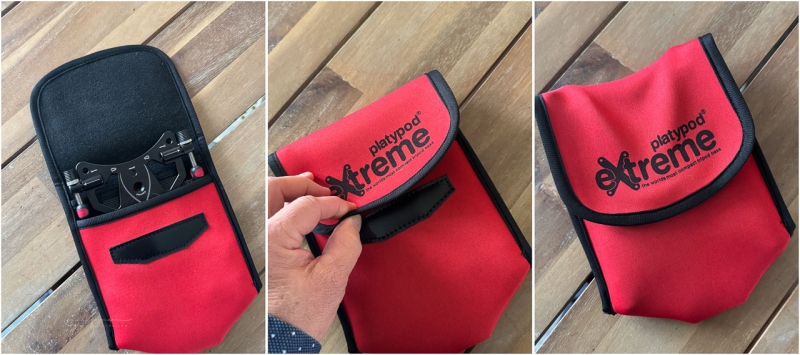
The pouch is too small for the Extreme.
The Delta is the smaller version. It gets its name from its triangular shape, with an adjustment screw at each “corner.” It measures 14.7 by 9.9 centimeters, is 6 millimeters thick, and weighs 119 grams.
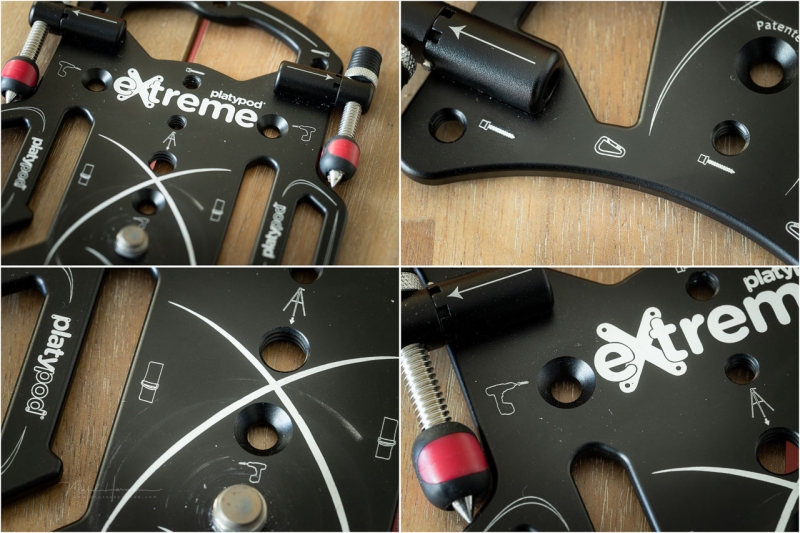
Details on the Platypod Extreme.
Each model includes a 3/8″-16 mount for attaching a ball head. A round Arca-Swiss-compatible plate is included, which doubles as an adapter to a 1/4″-20.
The plates also have several 1/4″-20 holes for accessories such as small lights. Both models include countersunk screw holes, allowing you to secure them to wood.
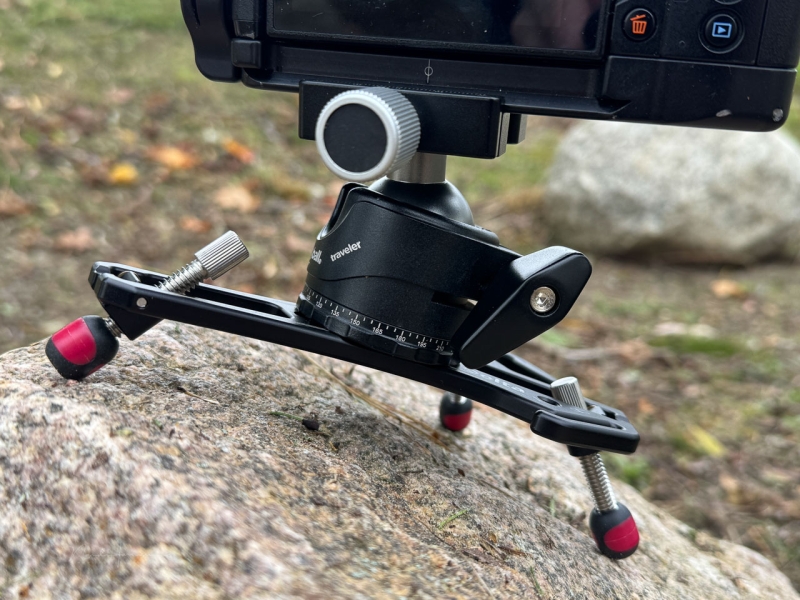
A ball head is mandatory. This is the Platypod Traveler. Small and designed for this kind of use.
A small ball head works best with the Platypod. The Platyball Traveler is ideal—not too big, not too small—and allows precise camera positioning. Both models support up to 10 kilograms, which is more than enough for most camera and lens combinations.
The Legs
Both models use similar legs: long screws with sharp points. They include rubber caps to protect delicate surfaces, and the caps can be removed entirely.
The Delta’s three legs rotate into position. Only one angle is possible, but they can be unscrewed and moved to any of the available 1/4″-20 holes. The eXtreme has four legs that click into five different positions. One end has a black cap; the other has the metal point with the rubber cap.
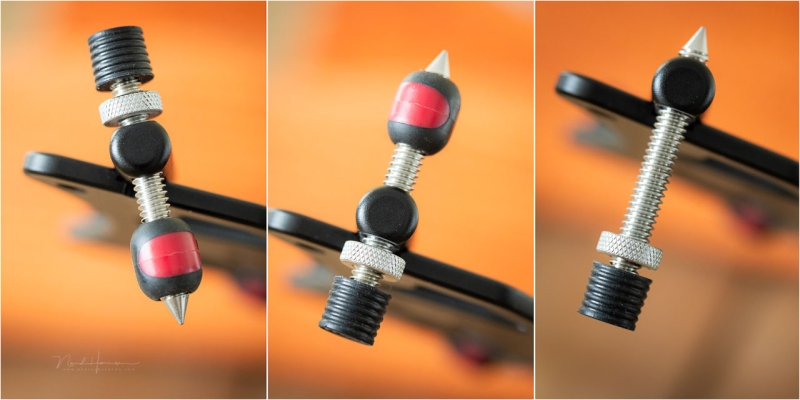
Details of the legs on the Platypod Extreme. The rubber caps can be placed on any position, or removed completely.
The rubber caps are important. They protect you and the surroundings from the sharp points of the legs. They can be screwed into any desirable position on the leg or removed completely. You need to unscrew the caps almost completely to hide the sharp spikes. The material of the caps is soft. If you do not screw the caps on carefully, the thread may be damaged.
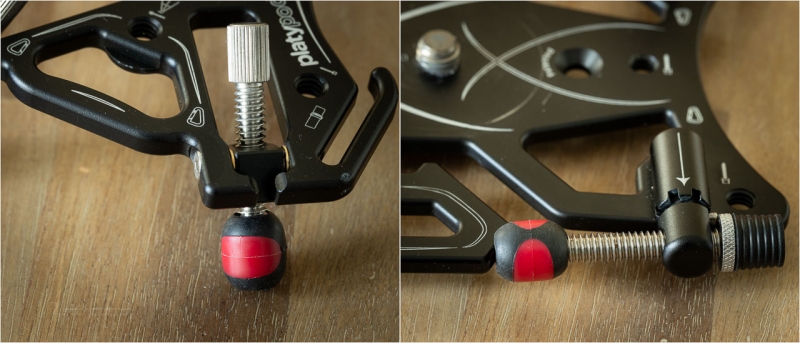
The legs of the Platypod Delta. They’re similar to the ones on the Extreme, but not completely.
When to Use the Platypod
The Platypod can act as a substitute for a tripod—especially when tripods are not allowed or when you don’t want to carry a normal tripod. Because they’re so flat, both models fit easily in most camera bags. The Delta can even fit in a pocket. The included carabiner lets you hang them on a belt or the outside of a bag as well.
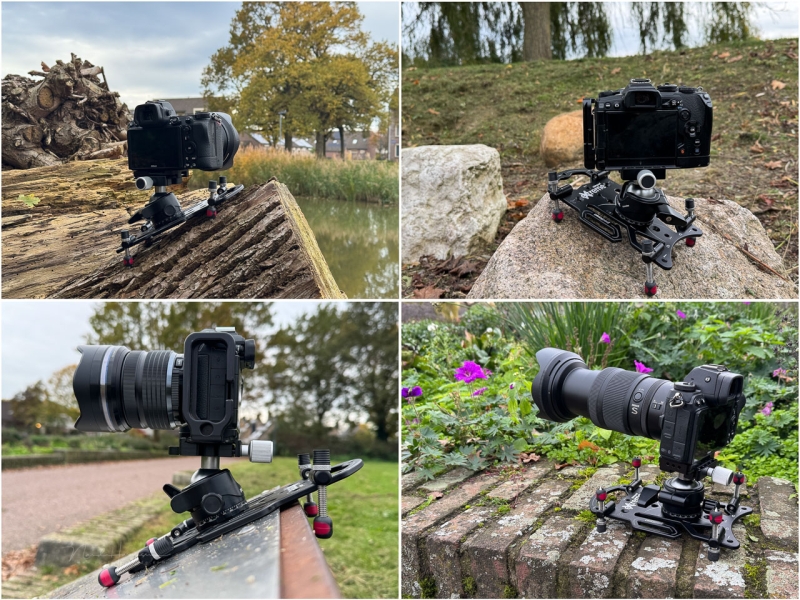
This is an example on how the Platypod Extreme can be used. Firm ground is advisable.
You can place the Platypod on almost any flat or sloped surface. The rubber caps or spikes provide good grip, and the eXtreme’s multi-position legs help with tricky angles, up to a certain point.
With the available strap, you can attach the Platypod to vertical pillars or narrow railings as well, reducing the risk of gear falling. However, due to the low profile, balance is critical—especially with larger lenses. Platypod highlights this clearly on its website.
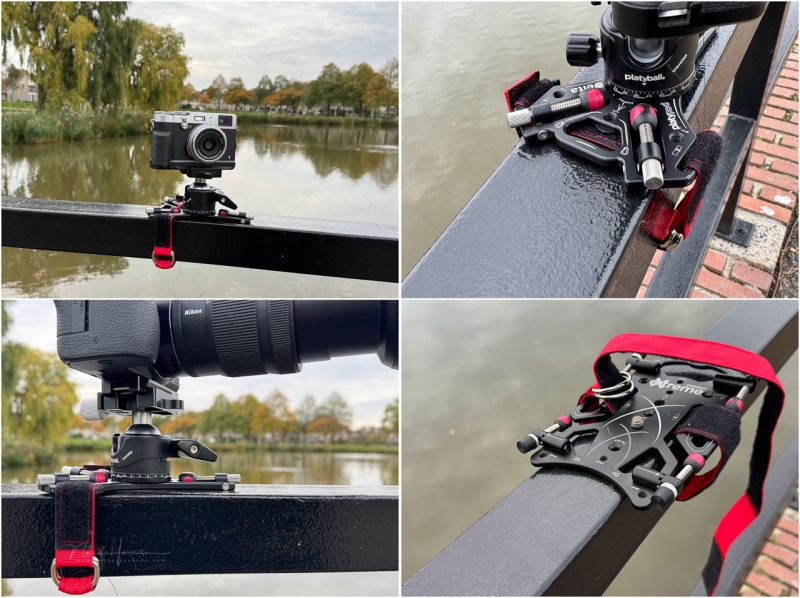
The Platypod Delta secured with the strap. You need some puzzling to secure it, due to the length. But it works.
Real-Life Use
Because of the short legs, the Platypod can only be used at low angles. To achieve a higher viewpoint, you must place it on a bench, rock, or another stable elevated surface.
Photographing mushrooms on a forest floor seemed like an ideal use case. However, I quickly learned that the Platypod doesn’t work well here. The forest floor lacks stability and flatness, making the platform unusable. Additionally, the limited space between the camera and the plate made operating the ball head nearly impossible.
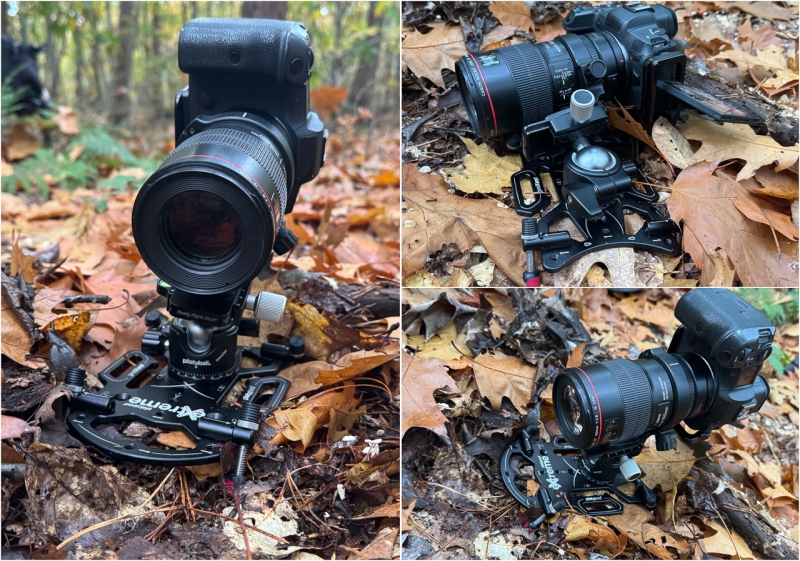
Using the Platypod Extreme on the forest floor proved impossible. This is no different with the Delta version. Positioning the camera is almost impossible.
My second intended use was with a gimbal head. The idea was to shoot from low angles or from a windowsill in a hide. A balanced gimbal keeps weight centered, so even large lenses theoretically should work. The Delta is too small for this, but the eXtreme seemed suitable.
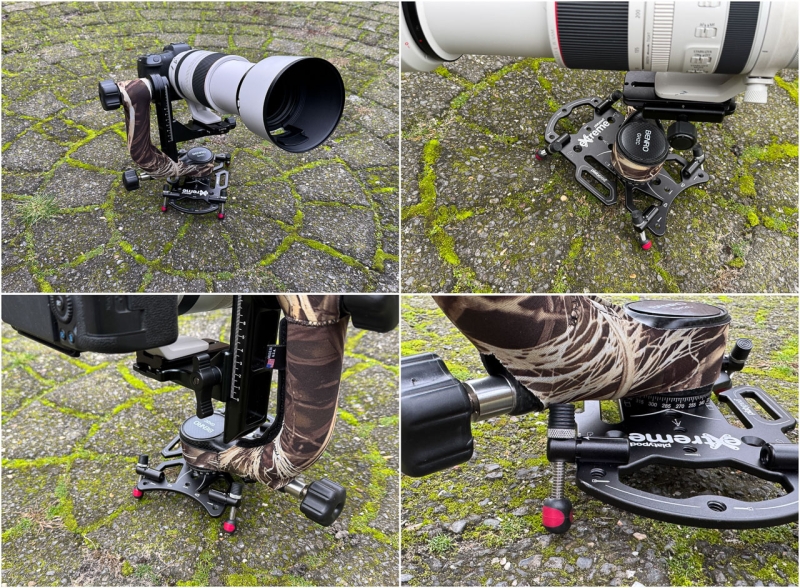
Using a gimbal head is possible, but there is no full rotation possible. The legs prevent this.
Unfortunately, the eXtreme’s legs extend too far above the plate. This prevents full rotation of a gimbal head. It also raises the center of gravity, making the setup more unstable than expected.
Where the Platypod excels is for relatively small camera setups on stable, hard surfaces—benches, stones, or level ground. The legs provide a few centimeters of adjustment for a little bit of uneven ground, but not much more. Achieving proper balance often takes more time than expected.
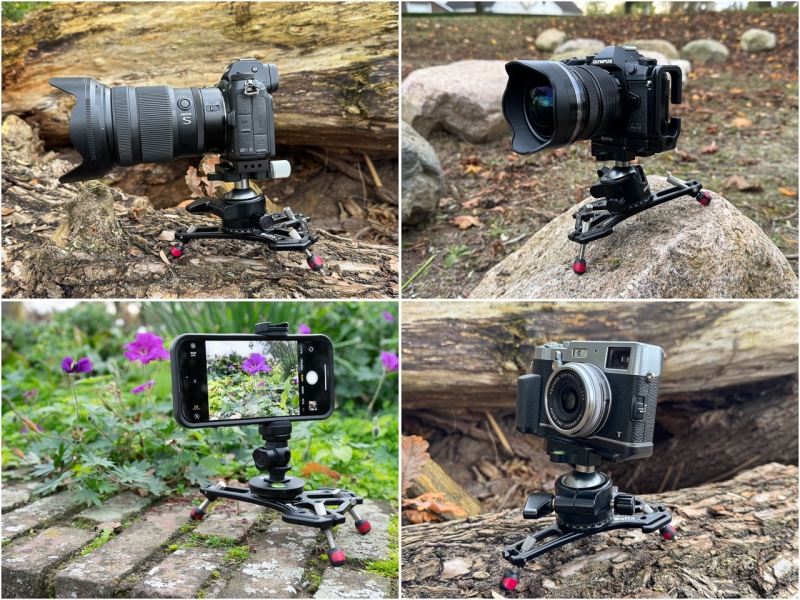
This is the kind of use the Platypod is intended for: relative small cameras and smartphones.
Things to Keep in Mind
You can strap the Platypod to vertical pillars. The Delta includes a strap; for the eXtreme, it’s an additional accessory. When strapped vertically, the camera can only be used in portrait orientation unless you use an L-bracket.
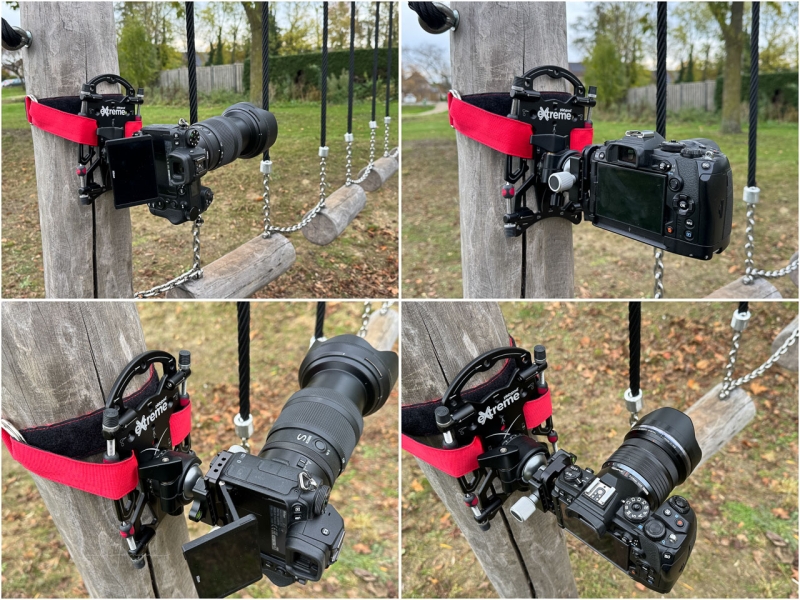
Mounting the Platypod to a vertical pole allows only vertical photos. Unless you use a L-bracket.
The sharp leg points are another concern. They can easily scratch or puncture surfaces, especially furniture. They also pose a safety risk. It’s easy to injure yourself while adjusting the legs or camera. I drew blood once while working with the eXtreme.
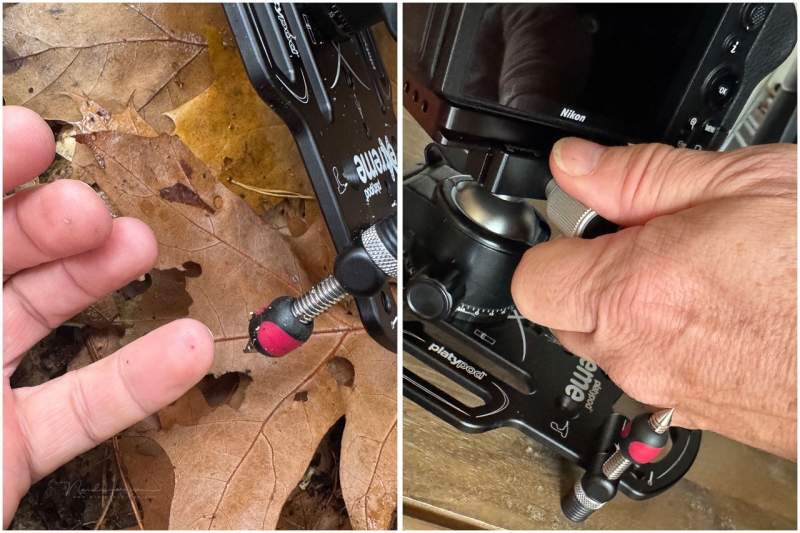
Using the Platypod can cause small injures. The legs are very sharp. So be careful.
The rubber caps offer some protection, but they must be installed when the legs are folded. Placing the Platypod in a pocket or jacket without the caps risks tearing the fabric.
When carrying the Platypod clipped to the outside of a camera bag, check the legs periodically—they can unscrew themselves, although the rubber caps can prevent the legs from unscrewing. Replacements are available if you lose one anyway.
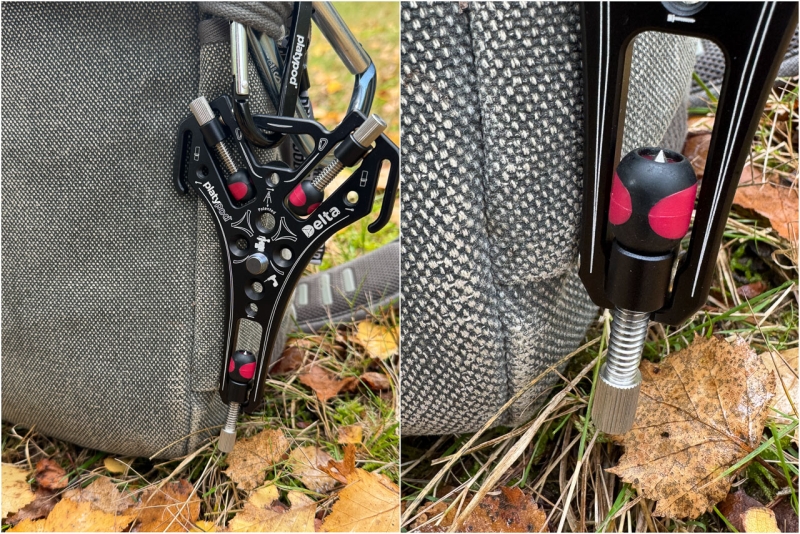
I noticed how the downward-facing leg on the Delta unscrewed itself while walking. The cap prevented losing the leg completely. Just be aware of that.
The Platypod’s thin profile is convenient, but remember, a ball head is required. Without it, the platform has very limited use. You must plan space for that as well. It’s not a big deal, but something to be aware of.
Conclusion
After several weeks of use, I found that the Platypod can be useful in certain situations. It allows you to position a camera in many creative ways. However, setup takes much more time than expected. Each leg must be adjusted individually, and the camera must be precisely balanced. Balance becomes even more critical with heavier cameras.
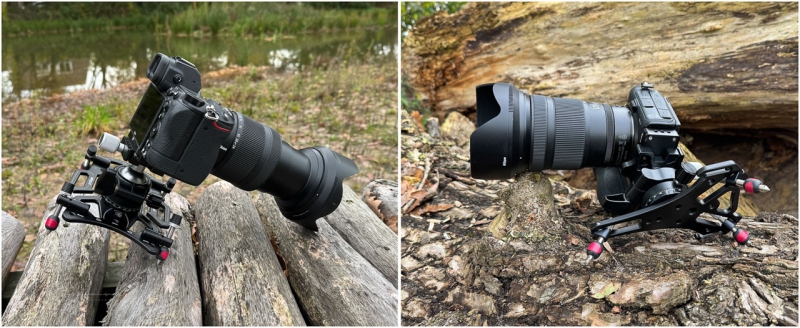
Balancing the camera is essential. Make sure you do.
The sharp spikes caused the most frustration. They can damage surfaces, tear clothing, and cause minor injuries if you’re not careful. They can be managed with caution, but they require your full attention.
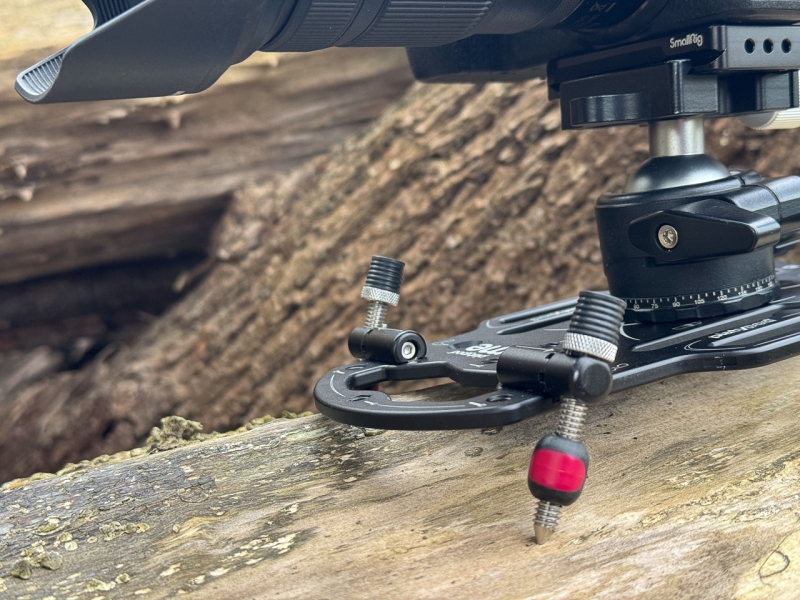
The spikes can be handy for securing the Platypod. But don’t use it this way on furniture or a car.
Using the strap also takes time and effort. Tree trunks are often too wide, and railings too narrow. Securing the Platypod with the strap can require some ingenuity. It’s something you don’t do if it’s for a single photo.
Mounting extra accessories to the 1/4″-20 points has limitations. On the eXtreme, the leg rotation sleeves can get in the way for the outermost mounting points. The remaining mounting points are near the center of the plate. The lens of the camera can get in the way.
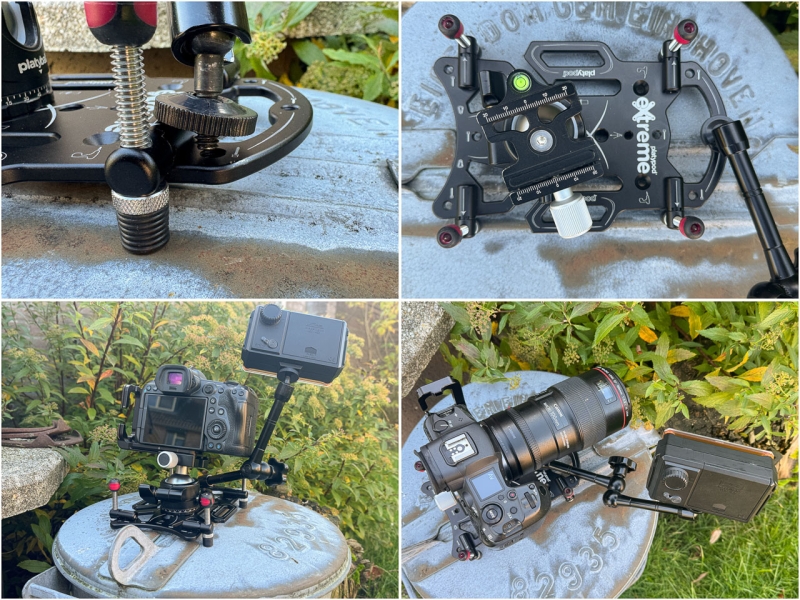
The 1/4″-20 mounting holes offer attaching additional accessoiries. These can be tricky to use due to their positions on the Platypod.
Platypod also offers a spigot for mounting lights. This can be useful, but softboxes or heavy modifiers will affect balance. It can be perfect for placing lights in tight spaces. However, there are perhaps simpler solutions that offer more security.
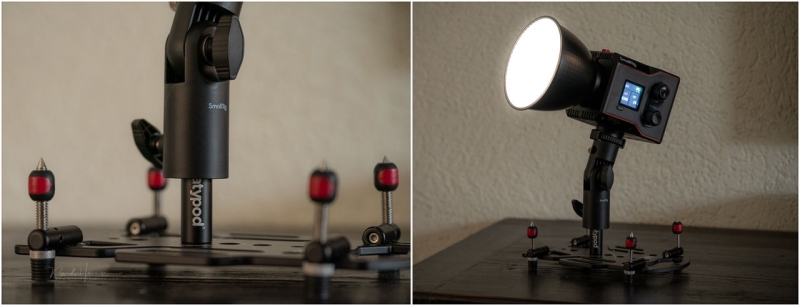
The spigot is helpful for attaching small lights.
The screw holes allow you to fasten the Platypod permanently, or you can use a clamp. But these solutions require tools and are more suited for fixed setups, not field use.
In theory, the Platypod offers countless placement possibilities. In practice, positioning is critical and often tedious, making it a niche tool rather than a general-purpose one. The Platypod is not a replacement for a tripod. It should be considered an optional accessory—not an alternative.
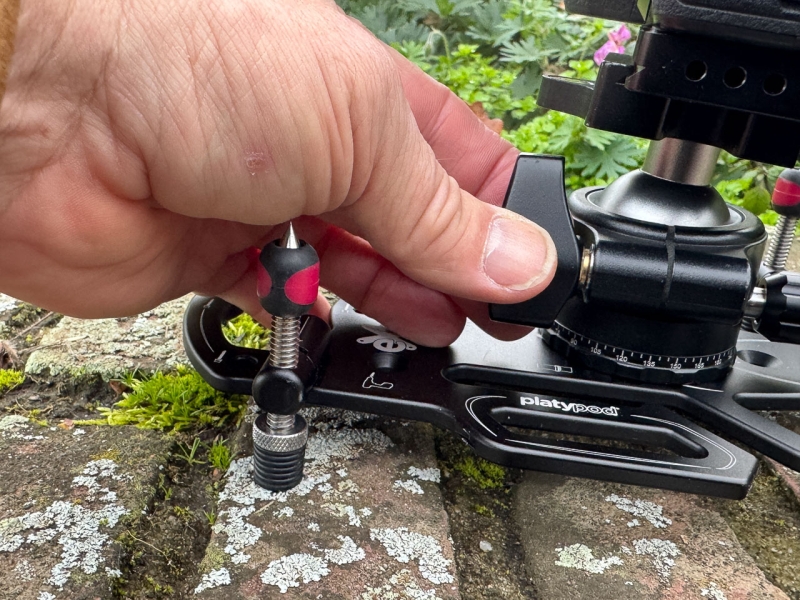
Ouch… I hurt myself. Again.
Pros
- Lightweight, flat profile
- Easy to carry
- Ideal for low-angle positioning
- Works well with a compact ball head
- Multiple attachment points
- Integrated legs (but removable if needed)
- eXtreme’s legs offer multiple positions
- Strap adds mounting flexibility
- Countersunk screw holes
- Rubber caps for delicate surfaces
- Useful for CO lights or mini LED panels
Cons
- Limited or unusable on uneven or soft surfaces
- Very sharp spikes (risk of scratches and injuries)
- Limited working room for the ball head
- Camera must be positioned exactly over the center of gravity
- eXtreme’s 1/4″-20 connection placement can be restrictive
- eXtreme barely fits in its included pouch
- Delta is suitable only for lightweight cameras or smartphones
- Screws can loosen when carried on a carabiner
- Rubber caps must be placed carefully on delicate surfaces
- Without an L-bracket, only portrait orientation is possible on vertical mounts
- Proper setup takes longer than a standard tripod
- eXtreme becomes expensive once you add accessories and a ball head
Is the Platypod for You?
If you decide to buy a Platypod, choose the version that fits your needs. The Delta is the smallest model and works best with smartphones or very small cameras. It also includes a bottle opener, if that matters to you.
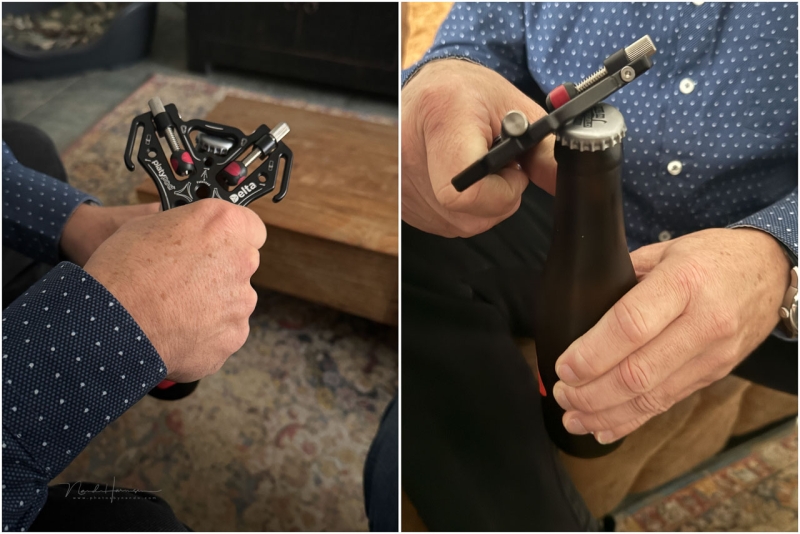
The Delta doubles as a bottle opener. If you need a beer during photography, perhaps?
The eXtreme is more versatile and supports slightly larger cameras. It’s more stable and offers enough space to mount a small light alongside the camera. But both models require a compact ball head.
For me, the Platypod didn’t fit my shooting style. It takes too long to set up and there are too many limitations. That doesn’t make it a bad product. It’s well-designed and thoughtfully constructed. Whether it’s right for you depends on your shooting needs—and whether its limitations matter in your work.
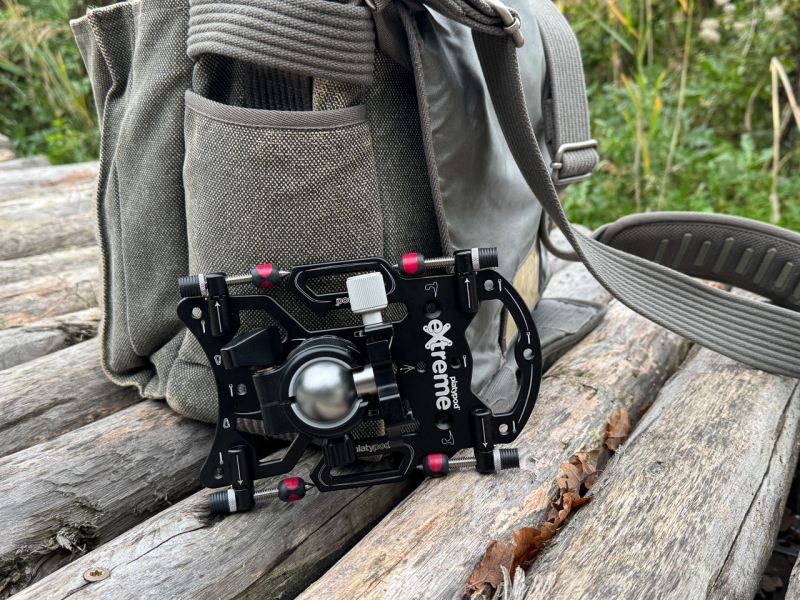
The Platypod needs to be used with a ball head. The Platypod Traveler works fine. Don’t forget to take it with you, otherwise you can’t use the Platypod.
The Platypod Delta is priced at $79, including the strap. The eXtreme costs $149. If you want the strap and accessories for the eXtreme, that’s an additional $34. The Platypod Traveler ball head costs $44.95.