Contents

This lens is definitely not what we expected, and I’m saying that as a good thing. Gone are the days of wide lenses being such a hassle to use, and this lens is one of the reasons behind that.
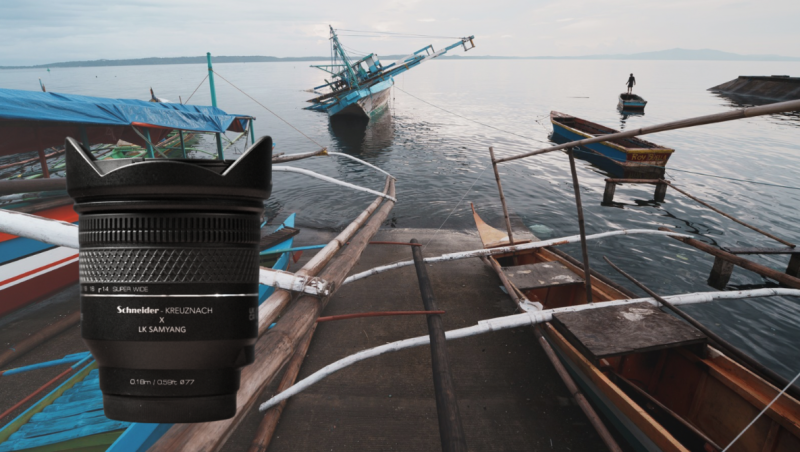
This past year, lens manufacturers have clearly focused on producing lens options that are outside the usual ranges. Some standard zooms and telephoto lenses have now been made available with wider apertures, and even wide angle prime lenses have shown up on the market as more compact and faster versions. This lens, co-designed by Germany’s Schneider Kreuznach and South Korea’s LK Samyang, gives the ultra-wide angle zoom a different range without making it any bigger or heavier than usual.
The Schneider Kreuznach x LK Samyang 14-24mm f/2.8
The n LK 14-24mm f/2.8 from Samyang, known in the US as the brand Rokinon, is available for Sony E-mount cameras compatible with both full frame and APS-C. Upon first hearing about this lens, the immediate expectation was that it would be big, heavy, and have a protruding front element that would make it harder to use with filters. This assumption comes from countless experiences with lenses wider than 16mm that became ultimately less useful because of ergonomic aspects.
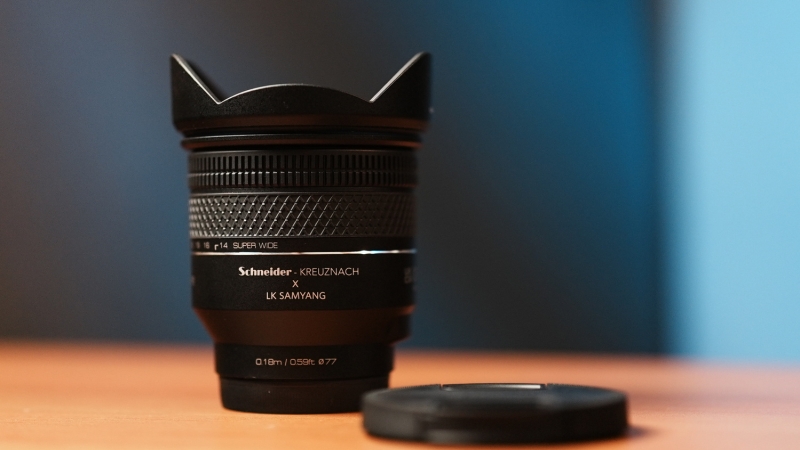
That assumption was absolutely wrong, and it was surprising to see this lens with a length of 98.63 mm and a width of just 84 mm, weighing just 445 grams. More importantly, it doesn’t have a bulbous front element, which allows it to be used with regular circular screw-in filters and square format filters for landscape photography.
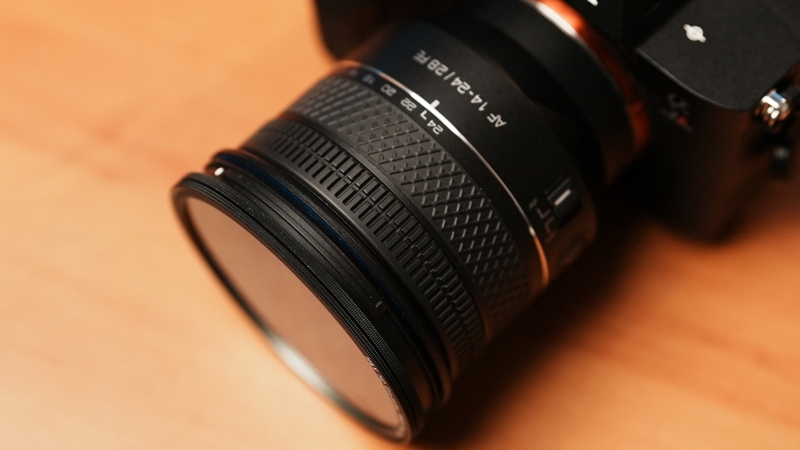
H&Y Evo series filters with magnetic adapter mounted
On the front is a 77mm filter thread covered by the reversible lens hood. It has a grip-textured focus ring on the most distal end of the barrel, followed by a thicker zoom ring with a different texture pattern. The lens zooms externally and extends when adjusted to a wider focal length, which exposes a potential space for dust and sand exposure. On one side of the lens is a customizable button along with a USB-C port for use with the brand’s calibration and update app.
Optics

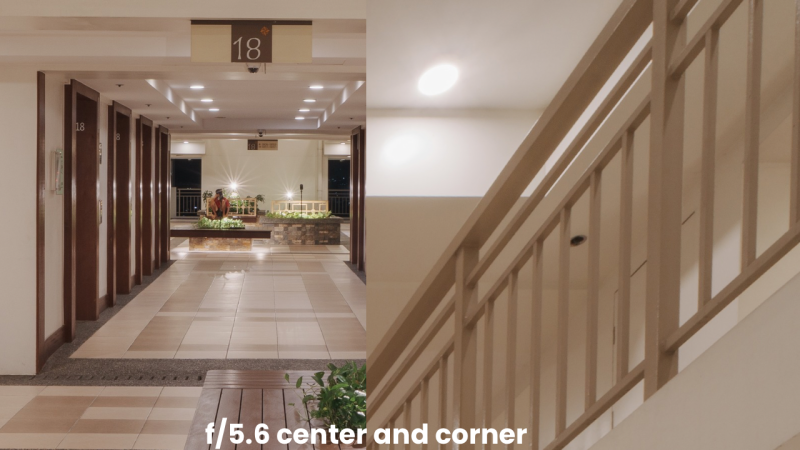
Aside from the physical aspects, the most striking thing about this lens is how sharp it is. It has an aperture range of f/2.8 to f/22, and throughout that range it showed significantly good optical performance. Upon closer inspection, the sharpest aperture for both the center and the corners seems to be f/5.6. Though smaller apertures bring more layers into focus, the sharpest details still appear at f/5.6.
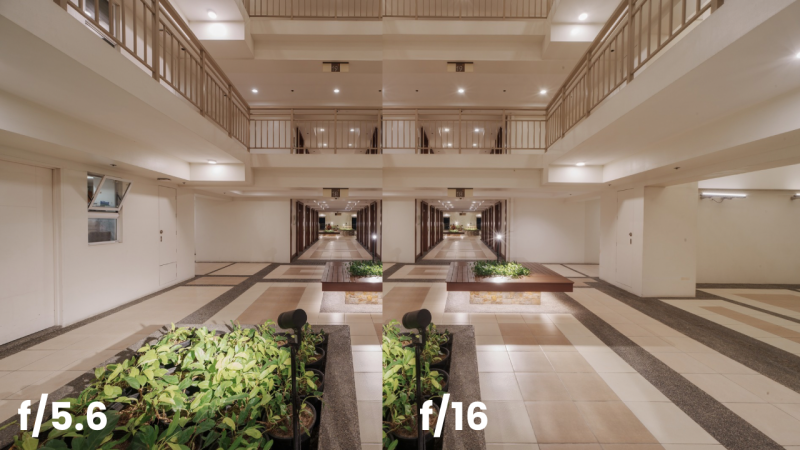
At apertures of f/8 to f/11, this sharpness remains pretty similar; however, beyond f/16, a significant decline can be seen.
Alongside this, it is undeniable that this lens has a significant amount of barrel distortion, which may be the trade-off for achieving such a focal range in such a small lens. This distortion remains visible up to about 20mm and is even more noticeable because of the approximately 1.5-stop vignette on the corners of the frame.
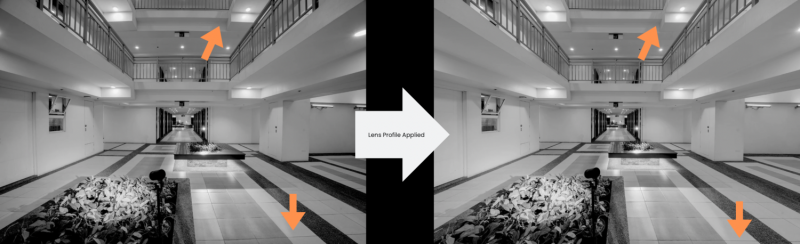
The distortion and vignette, considering the build and form of this lens, don’t come as a surprise at all. The brand has also made its lens profile available on its website, which can be added to Lightroom and Adobe Camera Raw for correction with just one click. After correction, the distortion is significantly reduced and the vignette is also compensated for. Personally, I noticed that the vignette correction may have gone too far, so I manually adjust it from 100 down to 50 on the vignette slider right below the correction module.
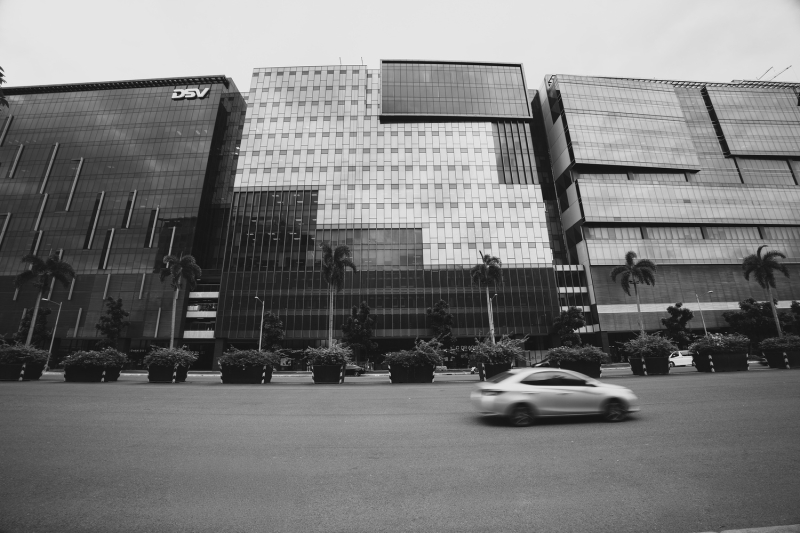
Example of shot with no distortion correction
Focusing
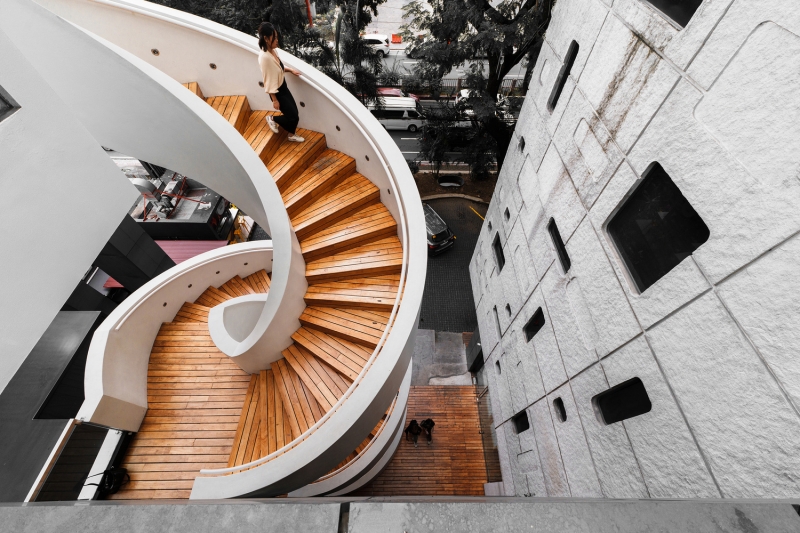
Autofocus on both photo and video is undoubtedly snappy and accurate, making it very easy to use when there is an abundance of light. Shooting moving subjects with the right subject recognition and tracking, even with wide focus selection, showed no misfocusing that I can recall.
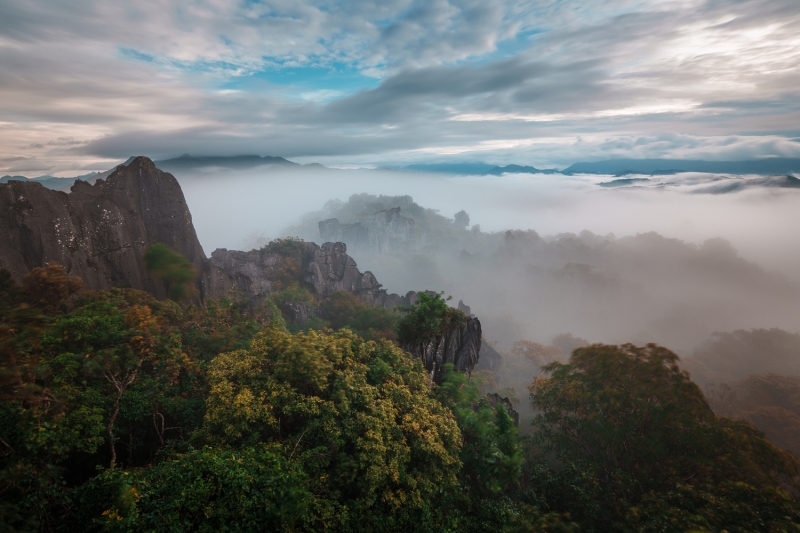
Missed focus with a heavy ND filter
However, there were some instances where the autofocus did miss in significantly dim environments and when used with heavy (12–16 stop) ND filters. This lag is reduced when on AF-C since continuous focus has less to adjust than single spot focusing.
Application

The LK Samyang/Rokinon 14-24mm f/2.8 is definitely a lens with a lot of possible applications. Primarily, it’s a great lens for landscape photography, specifically in locations with a lot of foreground elements. The close minimum focusing distance can also contribute to that if focus bracketing fits your approach. More importantly, it is widely compatible with regular-sized filters, both circular and square format. I recommend using either slim circular filters or 100 mm format square filters to avoid getting the rims of the filters in the frame at 14mm. However, I was also able to shoot with the H&Y Revoring Mk II landscape kit, though I had to deal with a bit of darkening in the corners at 14mm.
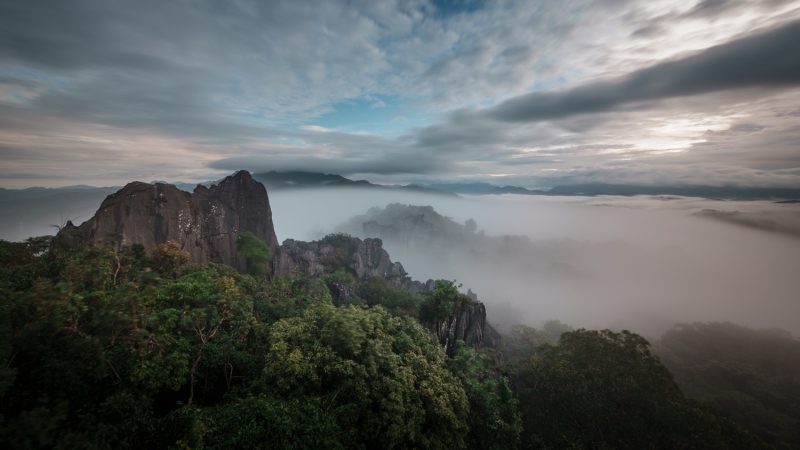
In addition, such a lens can be very helpful in shooting wide scenes for travel photography and street photography. An ultra-wide angle zoom can be very useful in such pursuits, especially with a range like this. More than anything, it will be the optical performance and the 14mm minimum focal length that offer a unique shooting experience.

Shooting architecture and interiors would require a bit of getting used to but is, of course, possible, even when you are wary of the distortion.
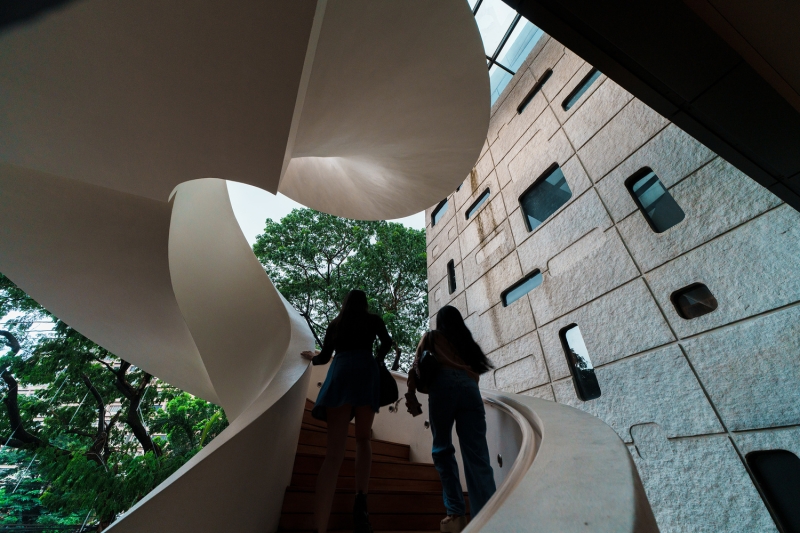
After correction, there’s very little trace of distortion, and most viewers won’t notice it at all. It would have been much better if the distortion correction profile could be viewed in-camera while shooting to avoid confusion when using grids, but other tools are available to make that easier. Nonetheless, the focal range, versatility, and overall sharpness of this lens make it a good option as well.
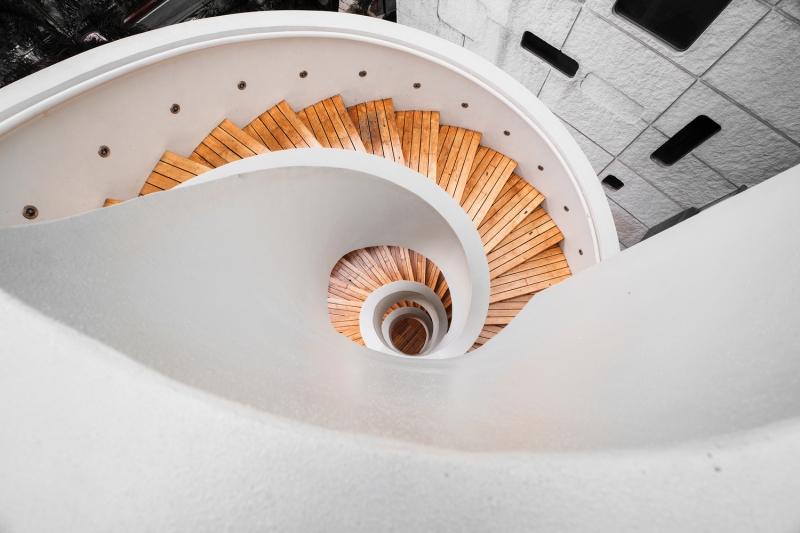
The LK Samyang/Rokinon 14-24mm f/2.8 is unique ultra-wide angle zoom lens and was definitely a pleasant surprise. A different range that did not come in a huge and bulky form yet offers really good sharpness.
What I Liked
- Unique wide-angle zoom range
- Fairly compact and light
- Uses standard filter formats
- Great glass quality
What Can Be Improved
- Heavy barrel distortion (easily corrected in post)
- Low light focusing